

You might not think that teenagers needed discovering. After all, people have been turning 13 for a very long time. But for most of human history, there was nothing special about that.
Ancient writers divided the human life into anywhere from three to seven stages, and none of them corresponded with the group we call teenagers. Depending on which writer you prefer, childhood ended anywhere from age 14 to age 17, and it was followed by the next stage which lasted until age 22, 25, 28, 30, 33, or 46. That stage was variously called iuventa (youth) or adulescentia (adolescence), again depending on which writer you prefer (Kosior). Personally, I prefer Servius Tullius who still classifies me as a youth because I am under 46.
Of course, all of these writers were primarily thinking of men when they drew the divisions. For us females, it’s unclear if the same divisions apply. Legally speaking, girls were children under their father’s care until they married and afterwards they were more or less children under their husband’s care. It’s true that the situation was a little more complicated than that, depending on time or place, but there wasn’t a clearly defined, universally recognized stage between puberty and legal adulthood, which is basically the period we now call the teenage years.
For some girls that’s because they got married right after puberty, so there wasn’t any time for an intervening stage. However, marriage that young was less common than we sometimes assume. In Rome, 12 was the minimum age for marriage, but far more girls married in their late teens (Alberici, 194).

There are occasional comments that suggest girls were not considered fully capable adults at the age of 12 or even 14. For example, Basil of Caesarea said that no girl under 16 or 17 should be choosing to enter a nunnery. Until then they were not yet “mistresses of their faculties” enough to make such a weighty decision (Alberici, 198).
As for what it was like to be a girl of that age, most of them were already hard at work. But for those privileged girls who didn’t have to worry about that, the prime concern was to maintain their virginity until such point as they got married. At least, that is the primary concern of the men who wrote about them. One suspects the teenage girls themselves thought there was more to life than that, but if so, they haven’t left us any written evidence of it. The virginity concern prompted a lot of drastic measures, up to and occasionally including a father killing his unchaste daughter (Caldwell, 68).
The idea that teenage girls might well be tempted into sexual activity was ever present in the thoughts of the advice writers. St Jerome, for example, recommended simple food, for “how can a young girl be confident of her chastity if her body is all on fire with rich food?” (Jerome, Letter LIV to Furia, 394 CE)
At the same time that girls were supposed to be fending off men and any amorous feelings, they were supposed to be attracting men and their proposals of marriage. Epictetus, the Stoic philosopher, wrote:
“As soon as women turn fourteen, they are called ‘ladies’ by men. Therefore, when they see that there is nothing else for them but sharing a bed with men, they start to adorn themselves and in this they place all their hopes. It is right then to be intent on making them perceive that they are valued for nothing other than decorous appearance and modesty.”
Epictetus, quoted by Lauren Caldwell in Roman Girlhood and the Fashioning of Femininity, p. 15
Sigh. I kind of want to throw things at this point, so let’s just move on.
Among the medical community there was recognition that this time of life could be tumultuous. As early as the 5th century BCE, Hippocrates mentioned that girls of this age suffered everything from numbness to madness to suicide. He didn’t know about hormones; he blamed an excess of blood. The solution, according to him, was marriage. Because pregnancy would cure all that (Caldwell, 82), at which point I laughed.
Rufus of Ephesus disagreed with Hippocrates, noting that very early pregnancy often led to complications for both mother and child. He suggested waiting five years after menarche for a first pregnancy, which is to say age 18 years old according to his own calculations (Caldwell, 97).
And so it will go for a couple more millennia. Teenage girls will sometimes be lumped in with children, sometimes with adults, depending on what’s convenient for the point at hand. You can see this, for example, in Jane Austen. Jane Bennett became a woman, so to speak, at age 16 (Austen, 380). That is when she “came out” which was the technical term for becoming marriage eligible, and a subject worthy of its own podcast episode, some other time. Lydia Bennett was already “out” at 15; and while Elizabeth admits that’s a bit young, the real horror from Lady Catherine is not Lydia’s age but the fact that she is out before her elder sisters are married. The implication is that Lydia’s status as a child could have continued for years longer because age was not the most important factor. Elizabeth specifically refers to Lydia as grown up (Austen, 207). She’s either a child or an adult, but not something in between.
True, Lydia is foolish, reckless, self-centered, and shortsighted: many of the qualities we now associate with teenagers. But then again, Lydia is not the only Austen character who matches that description. It’s also applied to some who are indisputably adults.
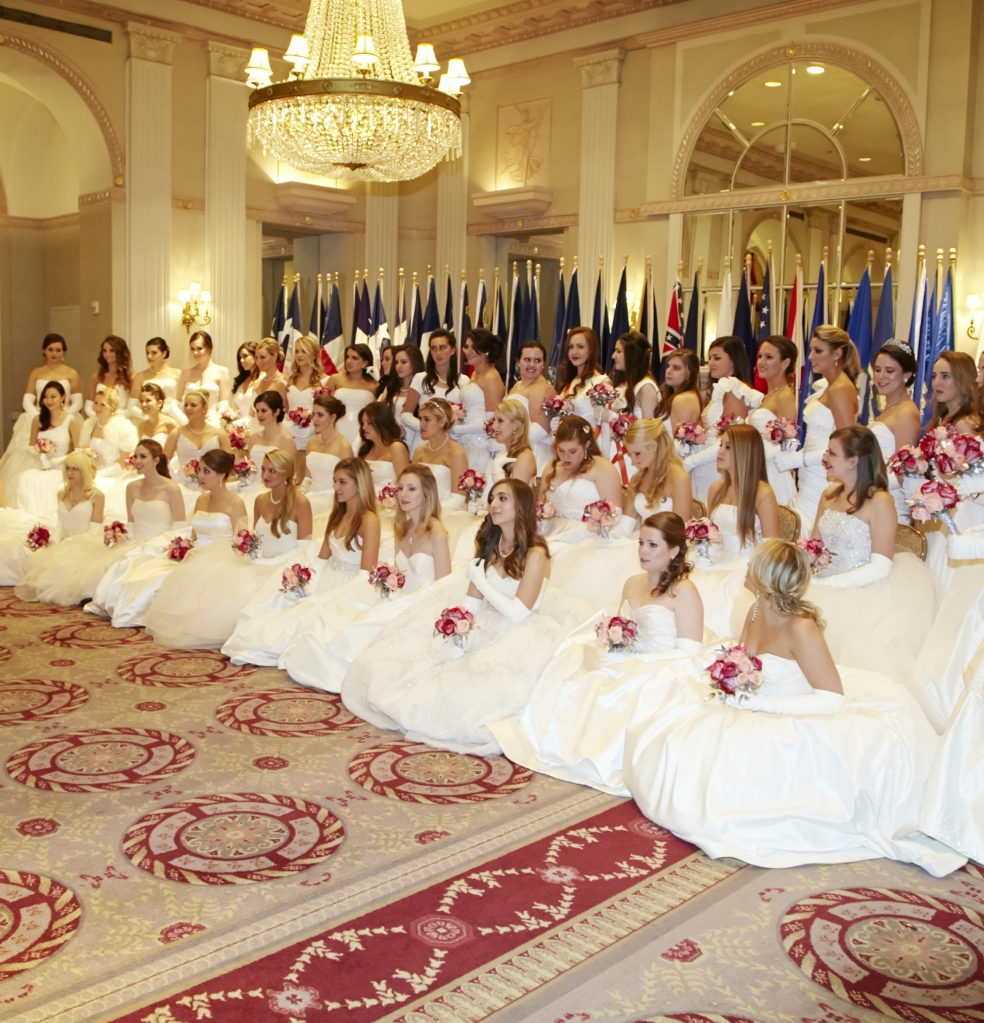
The Discovery (or Invention) of Teenagers
In all this time, from Hippocrates to Austen the word teenager was never used in the sources because it didn’t exist. It was actually only coined in 1911, and it didn’t catch on. But by 1911, we did already have glimmers of the concept.
In 1904 psychologist G Stanley Hall published the monumental work Adolescence: its psychology and its relations to physiology, anthropology, sociology, sex, crime, religion and education in two epic volumes. The book has some absolutely breathtaking statements, like when he says that “bookishness is probably a bad sign in a girl; it suggests artificiality, pedantry, and the lugging of dead knowledge” (Hall, 640).
So that’s me and my whole podcast skewered, but assuming that you are still reading my artificial, pedantic, dead knowledge, then the point for today is that Hall is the one who informed us that adolescence is a time of “storm and stress” indicated by moodiness, impudence, discourtesy, emotional instability, inebriation, criminality, feelings of inadequacy, appreciation for novelty, grossly indulged physical appetites, and spasms of profanity (Hall, 74-83).
Really, it all sounds so bad, you do have to wonder why previous generations had mostly failed to notice it. Had something changed?
And it turns out that, yes, a couple of things had changed. At least among the teenagers a person like G Stanley Hall was likely to see.
The first change was the rise of high schools. High schools are generally considered to be an improvement on the previous educational landscape, but they did have the effect of throwing teens together in a way they never had been before. Never before had a community of young people been so age-defined. Teenagers before had hung out with their families or their neighbors or their coworkers, regardless of what age these people happened to be, so the opportunity for developing a shared youth culture of slang, celebrities, and insolence was far more limited (Thompson). High schools also allowed adults to see teenagers in aggregate lumps, rather than as individuals, and seeing people as aggregate lumps rarely leads anyone to a high opinion of that lump.
Also, there had been this little invention called the automobile. The car allowed teenagers to get away from the disapproving glances of their elders. Boys could go off with other boys and cause problems, or they could go off with the girl of their choice. “Dating” was a term from Chicago’s working class in the 1890s to describe a concept that had really never existed before. (Mintz, 227-228). By definition, dating was away from home and unchaperoned, so teens were able to exercise their appreciation for novelty and indulge their physical appetites in ways that simply weren’t available to previous generations.
And believe me the previous generations noticed. In 1912 there was a hit song from Irving Berlin that warned girls to “Keep away from the man who owns an automobile” for “his great delight is to invite a girlie for a whirl.” “He’ll take you far in his motorcar. Too darn far from your Pa and Ma.” “There’s no chance to talk, squawk, or balk, You must kiss him or get out and walk” (Berlin). Lucky for me, 1912 is in the era of audio recordings and also beyond the reach of copyright, you can listen to the whole thing here.
In the early days, dating was not exclusive (Hine, 200, Mintz, 228). If you were a popular girl, you went on many dates with many boys. “Going steady” was not a term until the 1930s, and even then it was far less formal than the courting of earlier ages had been. Courting had always been aimed at marriage from beginning to end, but by now, not all girls envisioned an early marriage as the pinnacle of their hopes and dreams. Dating or even going steady might mean girls just wanna to have fun (Mintz, 228).
Dance halls pioneered an endless parade of new and somewhat scandalous dances with names like the bunny hug and shaking the shimmy. Girls as young as 12 or 13 attended these, unchaperoned, in the early decades of the 20th century (Hine, 187-188).

Adults were upset about the pernicious moving picture abomination too. Boys and girls sitting together in a dark room? Goodness gracious me. In 1909 one critic said “God alone knows how many girls are leading dissolute lives begun at the moving pictures” (Hine, 190).
Movies in the 1910s featured girls who were athletic and adventuresome. They bobbed their hair, shortened their skirts, and brazenly added makeup.

Teenage girls eagerly followed suit, to the horror of their elders (Mintz, 224). Girls had always been concerned about their appearance (remember Epictetus?), but by the 1920s, they had an entire industry selling them skin creams and acne treatments to try desperately to correct their so-called flaws (Mintz, 225). Also the word boyfriend slowly gained its current meaning (Mintz, 229).
So basically all the basic elements we associate with teenagers were firmly in place. They may not have had smart phones and video games, but they did have rebellion against the values of their parents who were way too stuffy and moralistic, even though the real reason their parents had never done these things is that these things weren’t available in their own youth.
Margaret Mead Bursts Western Expectations
It was in this climate of mutual disapproval that Margaret Mead burst onto the scene. Margaret was a twenty-three-year-old anthropologist. She spent nine months in Samoa collecting evidence to prove her mentor’s theory that all this storm and stress in adolescence is produced by modern Western culture, and it is not inherent in the human condition.
Upon her return, Margaret wrote Coming of Age in Samoa, published in 1928, and she made the interesting choice of writing it for a general audience, not for academic anthropologists. It was an unlikely bestseller. Or maybe not too unlikely given the nature of her conclusions. She definitely said Samoan girls don’t have all this storm and stress stuff. And the reason they don’t is because they live in communities of extended relatives, so if they do have an argument with someone they can just go live with a different relative, no problem. And crucially, because Samoan girls know all about sex, have it casually whenever they want, and delay marriage until they feel like settling down. Basically, they have nothing to feel stressed about.
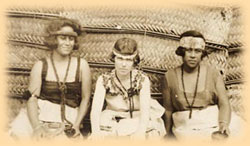
As you can imagine, reactions to this claim were mixed and vehement. On both sides. And reactions continue to be mixed, not just on the moral issues, but also on the scientific methods. Margaret’s idea of immersive research on the ground was ground-breaking at the time, when anthropology was still just a baby science. People didn’t do that. But subsequent developments meant that Margaret’s methods are now out-of-date and questions have been raised about whether any of her conclusions were correct, even about the particular Samoan girls she studied, much less the general culture (Appell, Glick, Shankman). Really, it’s a whole soap opera, continuing even now almost 100 years later, and the scientists involved in the soap opera are every bit as dogmatic and emotional as Margaret’s religious and moral critics always were.
For my own part, I doubt that everything in Samoa was as free and easy as Margaret claimed. Even if you can set aside 2000 years of religious guilt trips on the subject, there is a practical reason why many cultures, not just Christian ones, insist on chastity for girls. The reason is that sex leads to pregnancy, which leads to babies, which leads to somebody having to take responsibility for providing resources for the baby. There’s more than one way to handle that problem—I’m not saying there isn’t—but when I searched Margaret’s book for the Samoan answer to that problem, I found little about it, except her report that in “native theory, barrenness is the punishment of promiscuity and vice versa; only persistent monogamy is rewarded with conception” (Mead, 78).
Yeah, so I’m tempted to ask “How’s that theory working out in real life?”
And then there’s Margaret’s choice of words. If casual sex is a-okay, then why should there be either a reward or a punishment for it? Is that her own cultural baggage peeking through? Or was casual sex not actually as accepted in Samoan society as she claimed?
Basically I have no idea what the lives of Samoan teenage girls were like, but back in the West, the forces that had created teenagers as a group worth noticing were only intensifying.
School, Jobs, and the Creation of Youth Culture
The Great Depression sent record numbers of teens into high school because they couldn’t get jobs (Thompson). Also because child labor laws finally started having some effect.
Even so, youth culture dried up a bit because teens had little money to spend on things like dance halls and cigarettes. But in the grand scheme of things, the Depression was just a blip in the general rise in overall prosperity, which meant that parents had more money to lavish on indulging their precious offspring (Thompson). And after the war, business boomed. Jobs were back, and teens themselves earned money. Not necessarily all day in the factory for survival. But at the soda fountain or a department store, for pocket money. And pocket money burns a hole.
The first magazine aimed specifically at teenagers was Seventeen, which debuted in 1944 (Hine, 232). And I should say it was aimed at teenage girls. For reasons which I do not understand, there is no equivalent industry of magazines aimed at teenage boys (Massoni, 21). Seventeen was originally meant to promote a balanced girlhood, with articles on hard work and citizenship, as well as fashion and beauty. But let’s be real, the advertisers and maybe even the girls weren’t really that interested in hard work and citizenship. They were interested in a feminine ideal. One that could be sold (Massoni, 7). One in which girls could look and feel sexy, without actually having any sex, naturally.
Two months in, Newsweek noted that “The teen-agers’ response to this venture into a hitherto unexploited field—their fashions, hobbies, etiquette, school problems, amusements, and behavior—was electric. The first issue, which featured a forty-five-photo double-page spread of Frank Sinatra, sold its press run of 400,000 copies and brought 500 letters from readers” (quoted in Massoni, 45). Notice how Newsweek doesn’t mention hard work or citizenship. Note also that the word teenager does exist now, though it still needed a hyphen (Hine, 225).

Adults Are Angsty Too
Advertisers might have rejoiced, but other adults were feeling worried. Even the ones who had been the rebel teenagers in earlier decades, and I’m sure they felt they had reason. What with the baby boom, the world was about to see more teenagers than had ever existed on the planet before all at the same time. In 1960, 15 percent of the American population fell between ages 14 and 24. By 1969, they were 19 percent of the population (US census bureau). It was a veritable infestation of teenagers. These kids had no memory of a depression or a world war. Nothing to sober them. They had money, they had cars, they had hormones and moodiness, and when you put all that together in one obstreperous package, the adults got very, very worried.
In 1962, J Edgar Hoover, head of the FBI wrote a report in which he predicted a serious rise in crime due to all the young hoodlums America had produced. He did not mean merely petty theft or vandalism. He meant savage murder, forcible rape, and the like. He uses far more exclamation points than I ever expected to see in a law review publication. Those usually run pretty dry, but this one is downright heart pumping.
Hoover made no particular gender distinction, but every one of his example criminals is a teenage boy. Girls are only present in the role of victim. Which is not to say that adults didn’t look askance at the girls too, what with their miniskirts and go-go boots. One girl commented that miniskirts were great because they “meant that teenage girls like me didn’t have to look like our mothers” (V-A). Girls were also the number one group screaming at Beatles concerts.
Youth culture may have seemed frivolous, but they also had opinions on everything from war to social justice to the shortcomings of the previous generation.
Somehow, the world has managed not to end. Teenagers are a smaller proportion of the total population, but they still have an outsized influence on culture. Hip hop, rap, South Park, Taylor Swift, anime, Marvel comics, all were originally intended for teenagers, and all have expanded out of that age range.
While the negative stereotypes persist, there are also many spirited defenses of teenagers. Even many written by adults, who point out that the vast majority of teenagers get through the period without committing any savage murders (not even one!), that they are often polite and hard working, that adults are sometimes moody and rude too, and that really, maybe we should not look on young people as an aggregate lump. But one thing’s for sure, having discovered teenagers, I doubt that we’ll forget about them again.
Selected Sources
Alberici, Lisa A., and Mary Harlow. “Age and Innocence: Female Transitions to Adulthood in Late Antiquity.” Hesperia Supplements 41 (2007): 193–203. http://www.jstor.org/stable/20066790.
Appell, George N. “Freeman’s Refutation of Mead’s Coming of Age in Samoa.” Www.gnappell.org, 1984, http://www.gnappell.org/articles/freeman.htm. Accessed 1 Jan. 2024.
Austen, Jane. “Pride and Prejudice.” Gutenberg.org, 2019, http://www.gutenberg.org/files/1342/1342-h/1342-h.htm.
Berlin, Irving, Walter Van Brunt, and Irving Berlin. “Keep Away from the Fellow That Owns an Automobile.” 1912. Audio. https://www.loc.gov/item/jukebox-647850/.
Caldwell, Lauren. Roman Girlhood and the Fashioning of Femininity. Cambridge University Press, 2015.
Glick, Paula Brown. “Anthropology in the News: The Attack on and Defense of Margaret Mead.” RAIN, no. 58 (1983): 12–14. https://doi.org/10.2307/3033284.
Hall, G Stanley. Adolescence : Its Psychology and Its Relations to Physiology, Anthropology, Sociology Sex, Crime, Religion and Education. 1904, archive.org/details/adolescenceitsp03hallgoog/page/88/mode/2up. Accessed 3 Jan. 2024.
Hine, Thomas. The Rise and Fall of the American Teenager : A New History of the American Adolescent Experience. New York, Perennial, 2006.
Hoover, J Edgar. “Juvenile Delinquency or Youthful Criminality.” Syracuse Law Review, 1962, lawreview.syr.edu/wp-content/uploads/2013/01/Hoover-Article-on-Juveniles.pdf. Accessed 4 Jan. 2024.
Jerome. Select Letters of Saint Jerome. United Kingdom: Aeterna Press, 2015.
Kosior, Wojciech. (2016). The stages of human life distinguished in non-legal Roman sources. Krytyka Prawa. 2016. 10.7206/kp.2080-1084.108.
Library of Congress. “Samoa: The Adolescent Girl – Margaret Mead: Human Nature and the Power of Culture | Exhibitions – Library of Congress.” Loc.gov, 2019, http://www.loc.gov/exhibits/mead/field-samoa.html. Accessed 1 Jan. 2024.
Massoni, Kelley. Fashioning Teenagers: A Cultural History of Seventeen Magazine. United Kingdom: Left Coast Press, 2010.
Mead, Margaret. Coming of Age in Samoa : A Study of Sex in Primitive Societies. New York, Morrow, 1928, archive.org/stream/in.ernet.dli.2015.189627/2015.189627.coming-Of-Age-In-Samoa-Margaret-Mead_djvu.txt. Accessed 1 Jan. 2024.
Mintz, Steven. Huck’s Raft : A History of American Childhood. Cambridge, Mass., Belknap Press Of Harvard University Press, 2004.
Shankman, Paul. The Trashing of Margaret Mead. 2010. https://www.unl.edu/rhames/courses/current/readings/Shankman-Trashing%20of%20Margaret%20Mead.pdf.
Thompson, Derek. “A Brief History of Teenagers | the Saturday Evening Post.” Saturdayeveningpost.com, 13 Feb. 2018, http://www.saturdayeveningpost.com/2018/02/brief-history-teenagers/.
U.S. Census Bureau. “Characteristics of American Youth.” Census.gov, 6 Feb. 1970, http://www.census.gov/library/publications/1970/demo/p23-030.html#:~:text=Between%201960%20and%201969%2C%20the. Accessed 4 Jan. 2024. V&A. “V&a · the Miniskirt Myth.” Victoria and Albert Museum, 6 Apr. 2019, http://www.vam.ac.uk/articles/the-miniskirt-myth.
 Her Half of History

