
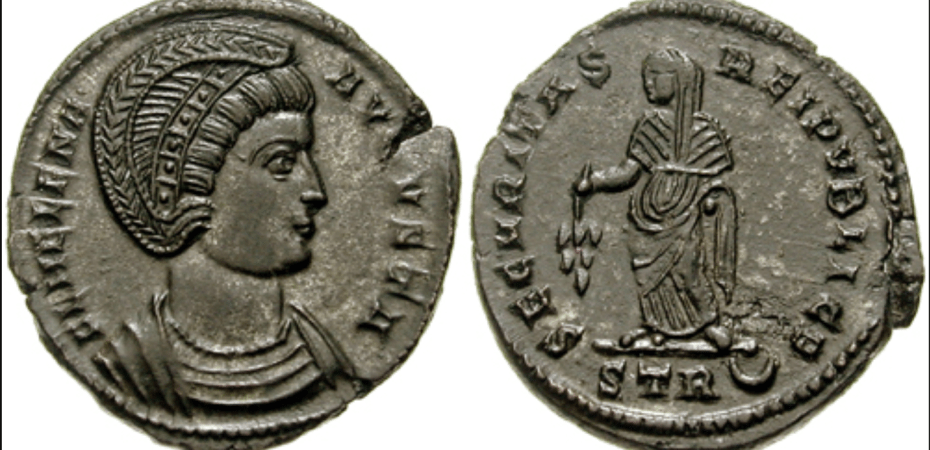
Depending on how you count, there were approximately 100 emperors of Rome, and most of them are a mere blip on the timeline, making no particular difference to the overall course of history.
But there are a few exceptions, and for all time biggest impact, I’m going to go with Constantine the Great, who reigned from 306 to 337 CE.
Constantine conquered plenty of territory, won a civil war, defeated multiple barbarian tribes, introduced coinage that remained pivotal for hundreds of years, reorganized the Roman bureaucracy, and founded a city that still exists (Constantinople, now called Istanbul). It’s all very good stuff, as long as you’re Roman, and not barbarian.
But other emperors have similar accomplishments on their resumes, and they don’t get called “the Great”. The reason Constantine gets the appellation is because he is the one who decided that Christianity would be the state religion, and not just than a persecuted minority.
You may or may not think that was a good thing, but either way, you live in a world that has been very heavily shaped by a Christian European worldview, and the reason Europe was Christian was Constantine. But he didn’t do it alone. He had a good mom. And this is her story.
A Girl of Unremarkable Origins
In approximately 248 CE, a girl named Flavia Julia Helena was born. Where? We don’t know. Some sources will say Drepanum which was a town in modern-day Turkey, but there is no documentation on that from her lifetime. There is no good documentation on anything from her lifetime, though there was an enormous amount written much later on seriously dubious authority.
We know absolutely that she was a real person. Because we have coins and inscriptions about her from during her lifetime (Consolino, 146), just not documents.
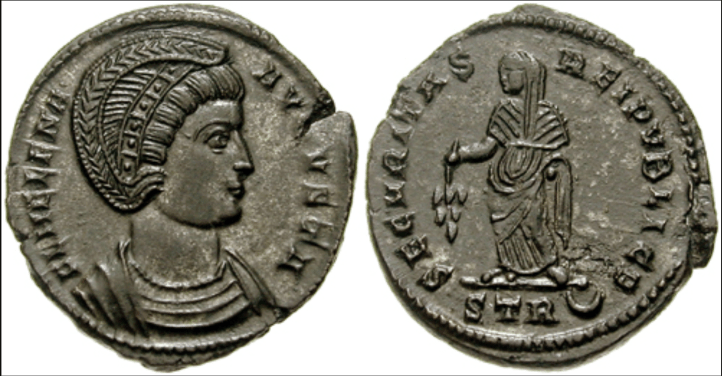
The oldest source that says anything more detailed than a coin is Eusebius who wrote a biography of Constantine shortly after Constantine died, and he devoted a good amount of space to Helena, bless him. She had already been dead for ten years. But it’s better than nothing and a lot better than the later sources by people who never met her at all, so I’ll be mostly sticking with Eusebius today.
We will pass over her childhood, about which he says nothing. That’s not surprising. Ancient biographies rarely thought childhood worth mentioning. He also doesn’t mention her parentage, which probably means it was nothing to be proud of. Later authors say that she was a stabularia. If we are feeling generous that means she was an innkeeper, a small-business owner. If we are feeling less generous, then it means she was a barmaid (Consolino, 144).
Somewhere in the neighborhood of 270 CE, Helena caught the eye of a certain Roman soldier named Flavius Valerius Constantius. He was not of glorious descent either, but Rome always appreciated a good military man and Constantius was a good military man. His career was looking up.
Helena and Constantius probably did not get married, though some of the later sources try to muddy that point. At the time, concubinage was well accepted, even by Christians. Marriage was about property and status. What’s love got to do with it? So concubinage was the answer when there was love, but not property or status.
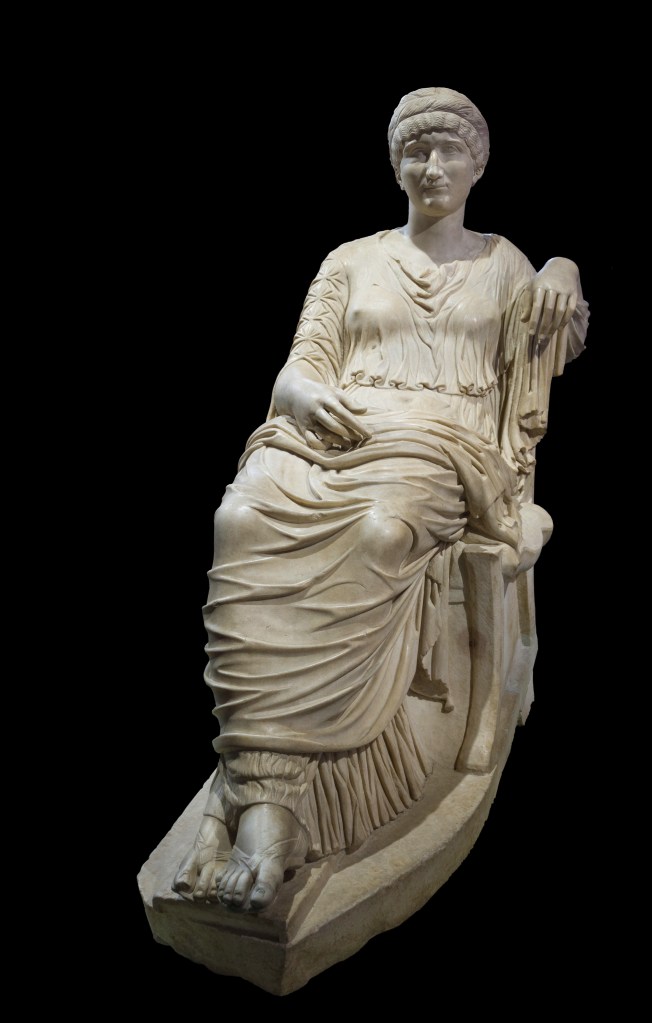
Anyway, Helena lived with Constantius for about 19 years, by one of several conflicting accounts. Imagine it, 19 years as a wife in all but name, and in 289 he ditched her. Why? Because he was offered the emperor’s daughter as a wife. There’s property and status for you.
How could a mere concubine compete with that? Especially a concubine who must have now been about 40, no longer in the flush of beauty or youth. The princess Theodora must have been younger. I know this not because I have a birthdate for her, but because she gave Constantius six children (Barnes, 3).
Like so many women in this situation, Helena just disappears. We have no idea what she did from 289 to 306. Maybe Constantius continued to provide for her? And maybe he didn’t.
Meanwhile, in the Empire
The emperor at the time was Diocletian, a remarkably successful emperor. One of his many innovations was the official recognition that the empire was simply too big for one man to rule effectively, which was true. He appointed a co-emperor and split the empire east versus west, and then split it again with two more Caesars. Constantius was a Caesar, and his son Constantine, son of Helena, was honored as the heir apparent. Being illegitimate didn’t negate that.
Constantine was therefore given the best possible education in Diocletian’s court. And maybe his mother came with him? I’d like to think so, but there’s no good source.
Everything changed in 306, because Constantius died. Constantine was way up in a far corner of the empire (in York, England) and his army proclaimed him as heir. He wasn’t sole emperor because neither was Constantius. But the truth was, splitting the empire between co-emperors sounded good in principle, but in practice it sort of meant endless civil war. Constantine was very, very good at war.
Over the next few years, he defeated the other claimants to the throne, and there is a great deal that can be said about that, only I’m not going to because there is no evidence that Helena was in any way involved. Presumably she sat well behind the front lines and alternately cheered and worried. It’s the life of a mother.
Up until this point I have said nothing about religion of any kind because there has been nothing to say. We have not the foggiest notion what religion Helena was, except that she wasn’t a Christian, and neither was Constantine. There have been scholars who said she was Jewish and others that said no, she wasn’t (Consolino, 151).
As for Constantine, he probably followed Mithras, a Zoroastrian deity that was thoroughly Romanized and encouraged by the Roman army. Not coincidentally, Mithras was born on December 25th. That day was set aside for the feast of Sol Invictus, the Roman god who was maybe not exactly the same as Mithras, but certainly closely intertwined.
Meanwhile, being Christian didn’t just make you unpopular, it was dangerous. Diocletian was a persecutor of Christians. However, Diocletian was no longer emperor.
A Conversion, of Sorts
In 312, on the night before the battle of Milvian Bridge, Constantine had a dream of the holy cross in the sky and the voice of God said, “In this sign conquer!” Upon waking, Constantine had the sign made in gold and precious stones, and it was carried before his armies, and they did conquer (Eusebius, chapter XXVIII).
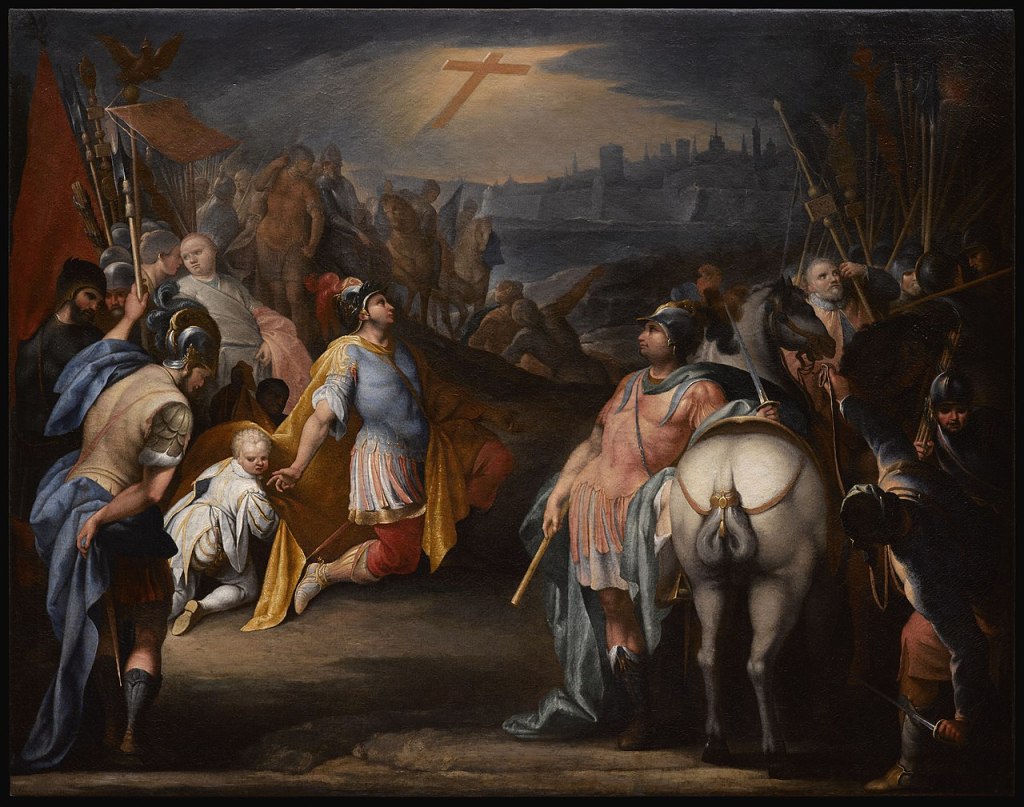
So says Eusebius anyway, who you remember was writing after Constantine’s death. The story is just a little suspicious though. There are older accounts of that battle, and the oldest one doesn’t mention any dream. The second oldest account does mention a dream, but the sign in the sky wasn’t a cross. It was a symbol that combined the Greek letter chi (χ) with the Greek letter rho (ρ). Very conveniently, this could stand for the name of Christ, and it could also stand for the word chrestos, which means good luck. Good luck from the gods. In other words, it was a symbol of God’s favor, but which God was entirely up to your own private interpretation (Potter, 141-144).
If you want further proof that this was not exactly a come-to-Jesus moment, there is also the fact that Constantine did not rush out and get baptized as a Christian. We really don’t know the state of his internal religious convictions.
We also don’t know the state of Helena’s, whose baptismal date is not recorded. Eusebius says Constantine converted her. But if he was so all-fired convinced, why didn’t he take the plunge and get himself baptized?
Some later accounts say that Helena converted him. Which is also possible, and in some ways would make more sense: like why he took so long to formally join himself.
The basic point is that we don’t know if Helena was a Christian already when Constantine did or did not have a dream about a symbol which may or may not have represented Christianity.
We don’t know if she was a Christian when Constantine began to sponsor the building of churches across the empire, especially in Palestine. Also, he restored the rights and property that had been taken from formerly persecuted Christians. To his credit, he didn’t insist on forced conversions. He made that clear in a letter to the eastern provinces, saying it was perfectly okay for those not yet convinced to participate in the pagan cults (Drijvers, 58). But possibly, the reason he was so generous on that subject was that he was one of the people not yet fully convinced.
Meanwhile, Helena was living in Rome. Probably. That’s where most of the inscriptions are (Drijvers, 31, 53). Constantine clearly valued her. He had coins minted in her honor, which is something my child has yet to do for me, I have to say.
Emperor, at Last
Then came the year 324, which was a watershed year. In that year, Constantine put down all remaining rivals and became the sole ruler of the Roman empire. It is also the year that he gave both his mother Helena and his wife Fausta the title of Augusta.
Augustus was the title held by Roman emperors, going right back to emperor #1, Octavian. Augusta is the feminine form, but unlike other similar titles, it was not automatically given to the emperor’s wife. It was conferred by the emperor on any or all of his female relatives as he saw fit.
In 324, Constantine did confer the title, and the imperial treasury took note. They began issuing coins with Helena Augusta and Fausta Augusta. I don’t mean just a one-time commemorative coin. A flood of such coins emerged from mints across the empire, from Antioch and Alexandria to Lyons and London (Drijvers, 41-43). This can only mean a significant change in status for both of these women.
Being sole emperor also meant that Constantine could bring Christianity to the forefront. Now that the military civil war was over, he could focus on the religious civil war. In 325, Constantine called the first Nicaean Council. He may or may not have had a lot of religious convictions himself, but I think he realized that the cause of a unifying state religion was not helped by Christians bickering among themselves, something they had a positive talent for. Therefore, Constantine called a council to settle the theological disputes of the day. The results of that council are still recited in Christian services around the world every single day.
Now at this point, I need to pause the cause of Christ for a little hiccup in the imperial family situation. It’s a hiccup that Eusebius does not even mention because it doesn’t go well with the narrative he’s promoting. It isn’t all peace and light and devotion to God.
In 326 Constantine executed his son and heir, Crispus. Shortly afterwards, he executed his wife Fausta (Drijvers, 60-61). Various sources, both ancient and modern, tie themselves into knots trying to explain why. Maybe Crispus was plotting against his father, and Fausta helped him. Such a thing would not be unheard of. But Fausta was not Crispus’s mother. He came from a previous entanglement on Constantine’s part. To be honest, getting Crispus out of the way could only mean elevation for Fausta’s own children. So why would she help him?
There are any number of other theories about what went down here, including one that says Fausta was having an affair with Crispus, her stepson. This sounds like smear campaign to me because ew. But it is a little more plausible when you realize she was only four years older than her stepson (Potter, 243). However, I still reject it on grounds of how could they be that stupid?
I will mention only one other theory because it’s the one that says it was Helena’s fault. There is zero proof for this theory, but it is certainly true that with Fausta dead, Helena was unquestionably the most important and influential woman in the empire. She was the one with a motive, see?
So it is feasible that the jealous mother-in-law convinced her son that Fausta was guilty … of something.
It is also feasible that this is all a pack of lies written by male writers who imagined a cat fight where there wasn’t one. Who knows? (Drijvers, 62)
The Pilgrimage
What we do know, with actual sources, is that Helena was about to make a journey. She left her home in Rome and traveled to the East.
Eusebius describes this as a pilgrimage: Helena was a woman of great faith. She wanted to walk in the places where Jesus walked. In particular, she dedicated a newly built church at Bethlehem, where Jesus was born. She also dedicated the newly built church at the Mount of Olives, where Jesus prayed the night before the Crucifixion and was later ascended into heaven. Helena also gave many alms to the poor, bonuses to the military, endowments to established churches, and freedom to many unjustly imprisoned captives.
From a religious standpoint, this is deeply significant. Helena was not the first Christian to show an interest in the Holy Land. But she was the first to do so in a highly public manner, which was written down and studied throughout Christendom for millennia. Her trip to the Holy Land was the model and inspiration for countless pilgrims to come. The very concept of a Christian pilgrimage largely came from Helena’s trip, as reported and interpreted by Eusebius (Drijvers, 72).
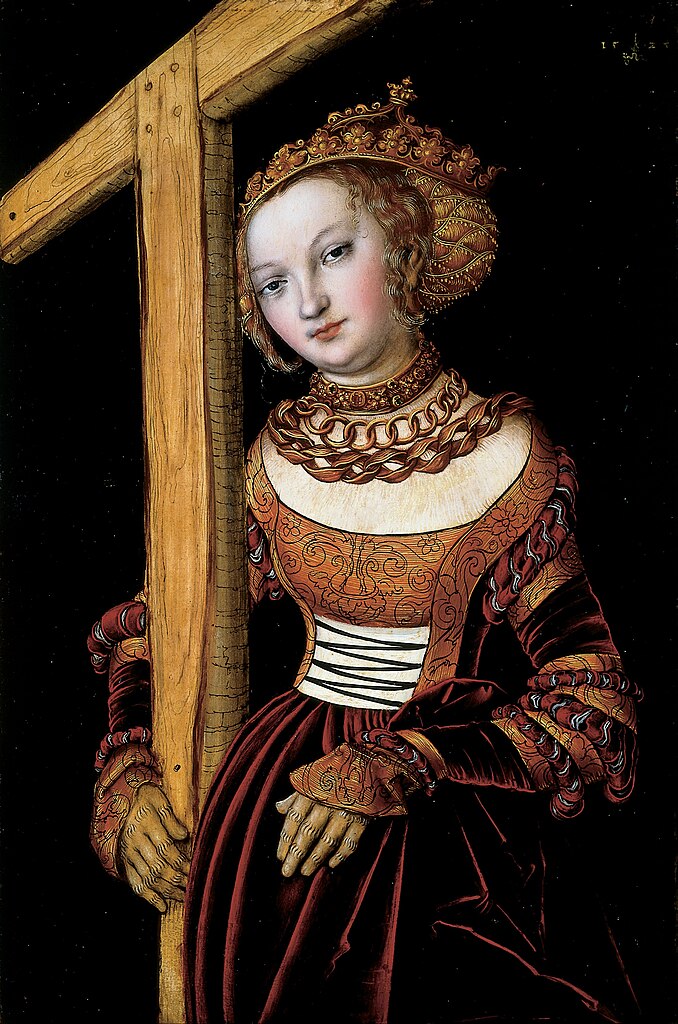
One connotation was different, though. Many later pilgrims traveled as penance, hoping to receive forgiveness of their sins. Eusebius gives no hint of that. Later authors who thought penance was part of a pilgrimage would say Helena went because she had sinned against Fausta. But Eusebius says no such thing. He calls Helena pious, reverent, wise, obedient, and full of good deeds. He says nothing about a guilty conscience.
And Eusebius had good reason to know. He was a bishop in Palestine. He was probably the one escorting Helena around on that part of her journey, though he does not exactly say so.
The other thing he does not say is that this trip may have served purposes other than just a devotional one. Here’s the issue: Constantine was trying to make a formerly persecuted religion into the state religion. People generally resent that. It is a political problem.
Helena may well have had true religious devotion. I see no reason to doubt Eusebius on that. But a woman who simply wanted to walk where Jesus walked did not need to make a big production of it. Helena did make a big production. Eusebius mentions that she had unlimited power to draw on the imperial treasury, and she spent a lot of money.
The alms she gave to the poor were Christian charity, but they were also quelling any discontent the populace might have felt about the religious situation, helping them see that maybe this Christian thing was a good idea after all. Same thing with the prisoners released and the gifts to even small churches in places Jesus never walked.
Most significantly, Helena gave bonuses to the army. The soldiers are the ones most likely to cause problems if they are unhappy. Rome had plenty of precedent for that.
In other words, Constantine was the man instituting this religious sea change, but Helena was the campaign team out on the ground making it work.
As historians, we don’t get to run the past like a science experiment, testing different variables. But we can certainly imagine that in a world without Helena, the army and the population looked at Constantine’s state religion and said, yeah, we don’t think so. And if they had, Constantine would be yet another assassinated Roman emperor. You and I might well be spending this month decorating and shopping for the feast of Sol Invictus. You never know.
But Helena did go. She was a huge success, and the rest is history.
None of this, by the way, needs to mean Helena was not also pious and devout. The human mind contains multitudes. We can have more than one motive at the same time.
The Legacy
Helena returned home in triumph and passed away soon afterwards. We don’t know exactly when, but the coins were no longer minted after the spring of 329 (Drijvers, 73). She was buried in Rome in a mausoleum attached to the basilica of saints Marcellino and Pietro, and there’s still a church property today, though of course the current building is much more recent than Helena.
Helena was canonized as a saint so early that there is no canonization date because the current process for that wasn’t yet in place. Her remains were sent various places as relics in the Middle Ages because of course they were.
As for Constantine, he remained emperor until 337. That spring he fell seriously ill. That was the impetus he needed to belatedly get baptized. He died of natural causes, which in and of itself is a major achievement for a Roman emperor.
One last note: Helena is frequently credited as the discoverer of the True Cross, on which Jesus was crucified. Fragments of it circulated Europe for centuries afterwards. Unfortunately, Eusebius does not mention anything about that, and unlike the Fausta thing, it would fit into his narrative very, very well. So his silence makes the story suspect. Also the fact that the 4th century did have other writers who were very interested in True Cross. None of them connect Helena with it (Drijvers, 81). The historical consensus is that her trip was real enough, but the True Cross discovery? Probably not.
Selected Sources
Barnes, Timothy David. Constantine and Eusebius. Cambridge, Mass., Harvard University Press, 1981.
Consolino, Franca Ela. “Helena Augusta: From Innkeeper to Empress.” Roman Women, edited by Augusto Fraschetti, Chicago, University of Chicago Press, 2001, pp. 141–159, archive.org/details/romanwomen0000unse_w2t7/page/n5/mode/2up?view=theater. Accessed 19 Nov. 2024.
Drijvers, Jan Willem. “Helena Augusta: Exemplary Christian Empress.” Studia Patristica XXIV, 1993.
Drijvers, Jan Willem. Helena Augusta : the mother of Constantine the Great and the legend of her finding of the true cross. Germany: E.J. Brill, 1992.
Eusebius. “Life of Constantine.” Fordham.edu, Internet History Sourcebooks: Medieval Sourcebook, 2024, origin.web.fordham.edu/halsall/basis/vita-constantine.asp. Accessed 21 Nov. 2024.
Potter, D S. Constantine the Emperor. Oxford, Oxford University Press, 2015.
 Her Half of History
How fascinating! You rock, Lori.
LikeLike
I really enjoy the way you write. The humor and the acceptance that we don’t have all the details and you don’t manufacture false History for the sake of telling your own convenient narrative.
I wonder did Constantine get influenced in his conversion to the Christian faithby his mother or by other people? or did it come from God directly? It’s not in frequent in history to have people of humble position influence others in higher positions who have access to them like servants, which influence the women which influence the men. But in this case we don’t have all the pieces of the story. But the spread of Christianity is interesting what the Lord and the Holy Spirit have been up to.
I know my spiritual journey and how it happened from many sources and now my faith is my own and I’m part of other people story. I wonder what impact I will have on the world. And I wonder the full length of my faith legacy.
PS… I’m a high school history teacher and stories like this are important to bring in. I’m going to check out more of this website and stories
LikeLiked by 1 person
Thank you! I’m honored by your interest!
LikeLike
[…] would really like to cover better, if only I had good sources. I remember one in particular was in series 4 on Born a Slave, but Now I’m Free. I ran across the name of a woman who was a slave in early modern Egypt, but then was freed and […]
LikeLike