Depending on your religious and cultural background, you may already have an answer to the question: Who was the first woman? In the Judeo-Christian world, her name is Eve. She’s created from Adam’s rib to be his helpmeet, though she also got him cast out of the Garden of Eden. Interpretations on that vary widely. In some medieval Jewish texts, Eve was actually the second woman. The first was named Lilith, created by God at the same time as Adam. But Lilith refused to be subservient to Adam and was therefore replaced by Eve, the second woman.
To the Greeks, the first mortal woman was Pandora. She was created by the god Hephaestus under the instructions of Zeus. Her purpose was to be a “beautiful evil” to punish mankind for having received the gift of fire from Prometheus, against the will of Zeus. Aphrodite granted her beauty, Athena granted her the ability to spin and weave, and Hermes granted her “a shameless mind and a deceitful nature”. But that was the least of mankind’s worries about Pandora, for she also opened the box or jar of all the plagues of the earth.
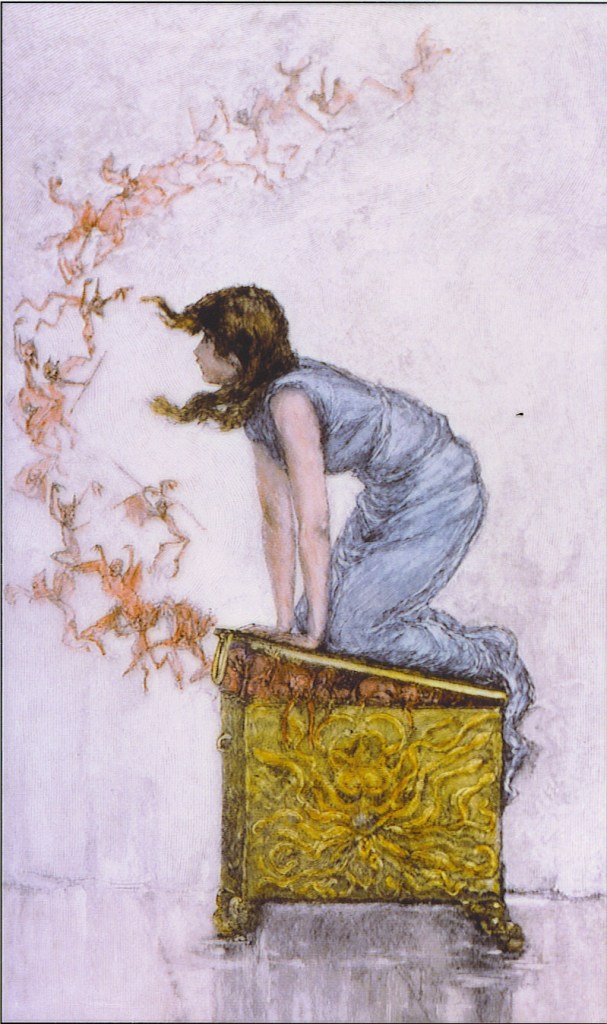
(If you’re thinking that women always get blamed at this point, I don’t blame you. But not all the traditions emphasize that angle so much.)
For the Norse, the first woman was Embla, who was found by the gods, alongside her husband Ask. But they were poor creatures, capable of very little until the god Odin gave them spirits, the god Hoenir gave them sense, and the god Lodur gave them blood and goodly color.
Among the Navajo, the First Woman was formed from ears of corn (as was the First Man). Together they overcame many challenges, but they also survived a bitter argument between them about whether men and women needed each other to live. (I believe the answer was yes.)
Among the Kikuyu people of Kenya, the first woman was Mumbi, who with her husband Gikuyu had nine daughters, each of whom founded one of the nine Kikuyu tribes.
I could go on. The variations around the world are endless and fascinating. The variations even within each tradition are endless and fascinating. But for a historian they are all problematic because history is the study of the written record, and even if these stories are true, all of these women lived before the invention of writing. Therefore, the first written accounts of them date from thousands of years after the events they describe. In historical terms, that makes the sources untrustworthy. If you believe in any of the above women, it’s a matter of faith rather than of historical evidence. Which is fine, by the way, but it is good to be clear on the difference.
The Historical Record
As far as history is concerned, all we can really ask is who is the first woman named in a record written during or reasonably close to her own lifetime? That’s a very different question.
When I asked it, I assumed that the answer would be a Mesopotamian woman. But I was wrong and I was misled by the way ancient history are presented in Western schools: first Mesopotamia, then Egypt, then Greece, then Rome. If there’s still time in the school year, maybe acknowledge that China and Mesoamerica exist too. All as if these are consecutive civilizations with no overlap.
Actually there is considerable overlap, especially between Mesopotamia and Egypt.
Mesopotamia and Egypt both invented writing at about the same time, concurrently. This seems like such an unlikely coincidence that many scholars have assumed Egypt didn’t invent it at all but merely knew a good thing when they saw it and copied their neighbors very quickly. Many other scholars think that is not the case, and the Egyptians did invent it independently, but there is no doubt that in about 3300 to 3200 BCE (Halton, 4), scribes in both Mesopotamia and Egypt were writing records that still survive.
As far as I have been able to find, the first named woman in any of those records is Egyptian. Though it is certainly true that dating is often a little iffy and there is always a possibility of other records I don’t yet know about.
The First Egyptian Queen
But for today, we’re going with it, and the woman’s name is Neithhotep. She lived only a couple hundred years after the invention of writing itself (about 3000 BCE). To put this into context for you, Cleopatra VII (the famous Cleopatra, episode 2.2) died in Egypt in 30 BCE. That’s approximately two thousand years ago to us, and we often call her time period “the ancient world”. But Cleopatra would have called Neithhotep the ancient world and then some, because Neithhotep lived three thousand years old before Cleopatra was ever born.
Neith is the name of a goddess. She’s one of the earliest Egyptian deities, and during that early period she was the most important goddess. She was most often depicted as the goddess of war, but she was also the goddess of motherhood and sometimes a creator goddess. It is interesting to think about which of those aspects was top of mind when Neithhotep was given her name, which means “the goddess Neith is satisfied.” That could mean a lot of different things for a goddess of war, motherhood, and creation.
We know nothing solid about Neithhotep’s family background, but one suggestion is that she was a daughter of a Naqada chief. Naqada is a site in Upper Egypt. (That’s upper from the point of view of people who oriented around the Nile river, which flows north. So we’re really talking about southern Egypt.) As far as I can tell, the only reason to that Neithhotep was from Naqada is that she was buried in Naqada.
The Naqada chiefs were not called Pharaohs because Egypt was not united. The man who did that was Narmer, a southern warrior who conquered the various city-states and became the very first king of the very First Dynasty. At some point along the way, he married a woman named Neithhotep. If the marriage happened after Narmer’s final victory, then perhaps Neithhotep was not the name the girl was born with, but one given to her later. As in, the goddess of war is satisfied because Egypt is united. However, there is nothing in particular to clarify that. It’s just a possibility.
Neithhotep’s Tomb
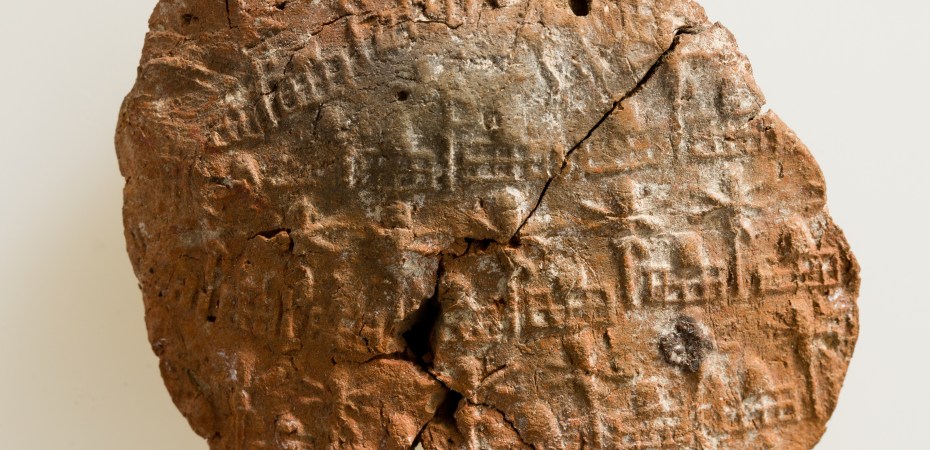
Neithhotep’s name has been known since her tomb was excavated in 1897 by Jacques de Morgan. The tomb had already been looted, even during ancient times, but it still contained cosmetic items, stone vessels, ivory labels, and clay sealings with the names of Narmer, Neithhotep, and their son Aha. The tomb no longer exists. Early archaeologists didn’t always know how or care about protecting a site after excavation. After it was exposed, it eroded away completely.
That’s very unfortunate, but at least some of Neithhotep’s artifacts were removed first. There is an ivory lid where she is given the title “Consort of the Two Ladies.” There is also a bracelet made of alternating ivory and slate plaques.
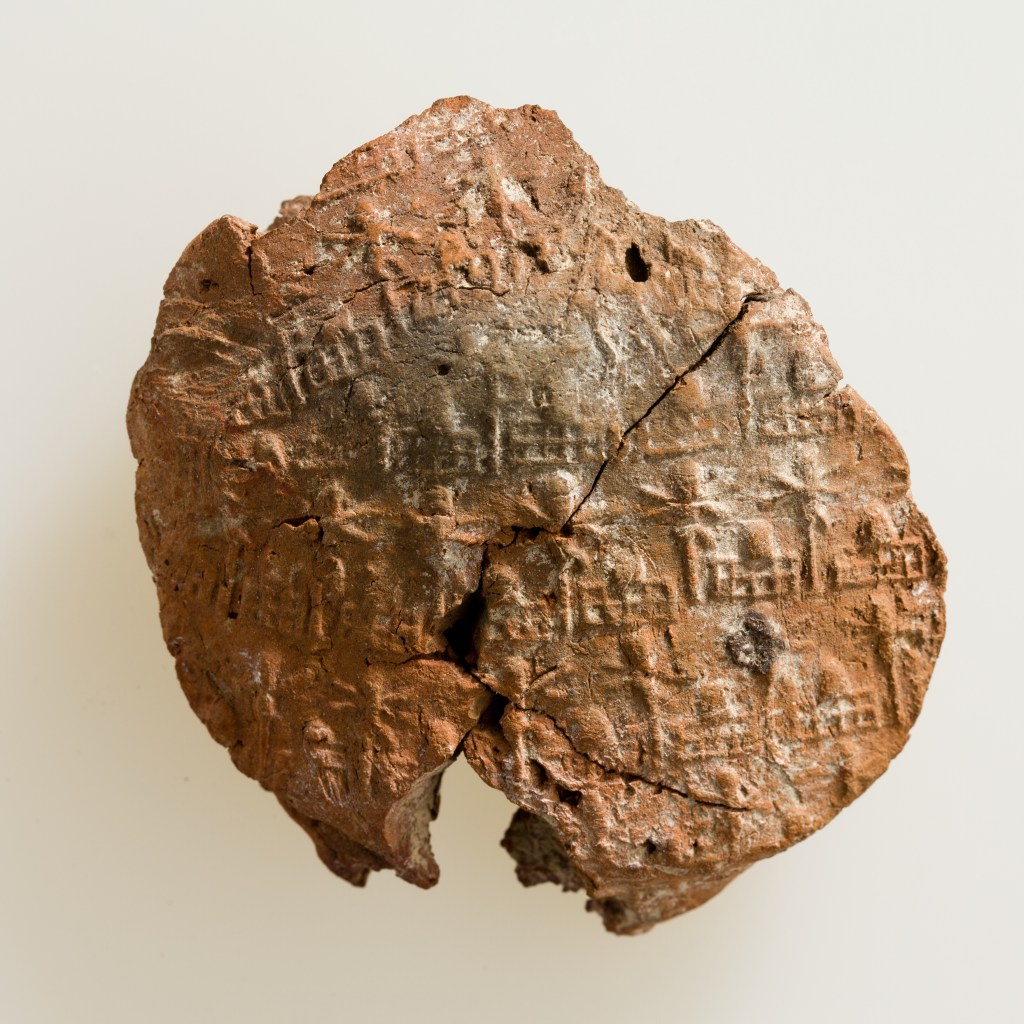
This tomb yielded her name, but she was assumed to be a relatively insignificant figure, like most queen consorts. Even the relationships I have described have been cast into doubt because no where is she given the titles of King’s Wife or King’s Mother, both of which would later become common for Egypt’s queens. So maybe we’ve got even those family relationships wrong. This is a hallmark of the most ancient historical research. The records are so spotty and so hard to interpret that practically everything is disputed by someone.
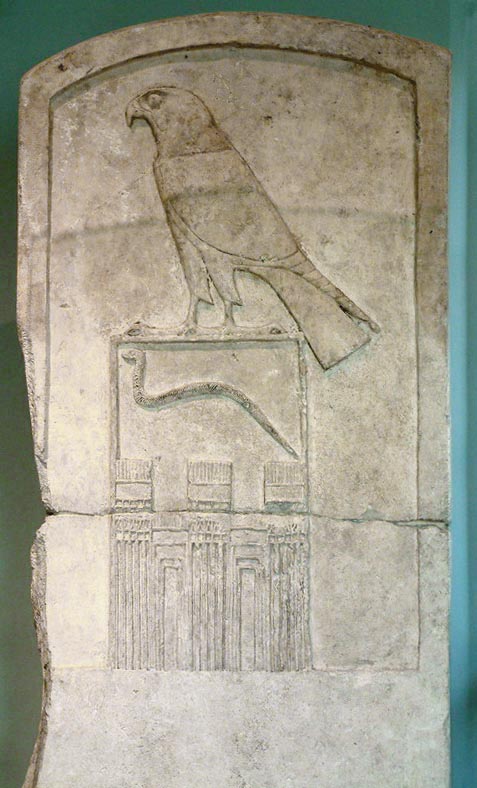
As a case in point, some scholars have suggested Neithhotep had a stronger political role that King’s Wife and King’s Mother would imply, even if they had been used, which they weren’t. In one place, Neithhotep’s name is listed with a serekh. A serekh is a hieroglyphic symbol of a rectangle that represents the gate of a palace. On top of the rectangle is the symbol of a god, and in later dynasties, the symbol was usually the falcon for Horus, god of kingship, the sun, and the sky. In other words, the very best god. Using the serekh indicated that the attached name was a royal name, and probably the reigning pharaoh.
In Neithhotep’s serekh, the rectangle is topped with the crossed arrows that symbolize Neith. In other words, the very best goddess at the time. Some (but not all) scholars believe that the presence of Neithhotep’s serekh indicates that she outlived her husband and actually ruled Egypt as pharaoh, either in her own right or as regent until her son Aha was old enough to take on the job.
Neithhotep’s Expedition
The theory that Neithhotep actually ruled (which not everyone accepts) is bolstered by more recent finds outside of the tomb. In 2012, a series of badly eroded rock paintings were discovered in South Sinai. The inscriptions list Neithhotep as the patron of a resource expedition to this area, probably in search of copper and turquoise.
I would not have thought that a queen consort was incapable of sponsoring such an expedition, but according to some of my sources, in Egypt only a sovereign ruler could do that (Willeitner). Of course, the same source also suggests that she was not actually Narmer’s wife and Aha’s mother, but Aha’s wife, and mother of Djer, the third pharaoh of the First Dynasty, and it was for him that she acted as regent during his minority, which is certainly not what my other sources say.
As I said, it’s all very mixed up and confusing. But if Neithhotep was a regent for anyone, Aha or Djer, then she would be not just the first woman recorded in history, but also the first female ruler recorded in history.
The one thing on which I think all scholars do agree is that Neithhotep actually existed, which is more than I can say for Kubaba, the Sumerian queen who I discussed in bonus episode 12.a. Kubaba is unquestionably listed in Sumerian chronicles as a ruling queen. It’s just that the chronicles were written a very long time after the fact and include some details that seem extremely doubtful, to say the least, placing her more in company with Eve, Pandora, Embla, and the like, than with later historical figures.
First in a Long Line of Queens
Even if Neithhotep did not really rule herself, she is the first in an astonishingly long line of queens of Egypt. It is a little mind-blowing how long the Egyptian civilization lasted. Neithhotep’s dynasty lasted for 250 years, which, for context is exactly how old the United States is as a country, as of this upcoming July. But Neithhotep’s dynasty was followed by 32 more dynasties over the next 3000 years. Those dynasties included some astonishing queens, like Sobekneferu, who claimed and held power at the end of the 12th dynasty. Hatshepsut, of the 18th Dynasty, who ruled first as regent, and then claimed the throne herself and had herself depicted in art as a man with flat chest and full beard. Nefertiti, also of the 18th Dynasty, who was stunningly beautiful and together with her husband overhauled the state religion to make Egypt monotheist. And finally, the most famous in modern times, Cleopatra VII (episode 2.2), who ruled in her own right as pharaoh, playing for time against the threat from Rome. And she did so successfully for years, it was only after her capture and death that a 3000-year run of Egyptian pharaohs came to an end and Egypt was absorbed into the Roman empire. Very few civilizations have lasted so long. Whatever her actual details are, Neithhotep began something big.
I have a special thanks today to Grace, who made a one-time donation. Supporters like Grace keep this show running. If you are able to chip in, visit the website for a variety of ways to do it. Patreon and Into History supporters at a certain level also get access to ad-free episodes and bonus episodes, and the first bonus for this series is already out and available. There’s a certain letter from over in Mesopotamia, from an unnamed woman with some serious and yet very familiar complaints. Episode 12.a is The First Recorded Angry Wife. Available with subscription or individual purchase.
Selected Sources
Ancient Egypt Online. “Neithhotep | Ancient Egypt Online.” Accessed December 31, 2025. https://ancientegyptonline.co.uk/neithhotep/.
Halton, Charles, and Saana Svärd. Women’s Writing of Ancient Mesopotamia an Anthology of the Earliest Female Authors. Cambridge New York Delhi Singapore Cambridge University Press, 2018.
Jarus, Owen. “Early Egyptian Queen Revealed in 5,000-Year-Old Hieroglyphs.” Live Science, January 19, 2016. https://www.livescience.com/53406-early-egyptian-queen-revealed-in-hieroglyphs.html.
Tyldesley, Joyce. Chronicle of the Queens of Egypt. Thames and Hudson, 2006.
Willeitner, Joachim. “Die Erste Frau Auf Dem Pharaonenthron.” Spektrum.de, January 3, 2016. https://www.spektrum.de/news/die-erste-frau-auf-dem-pharaonenthron/1401358.
 Her Half of History