I realize that not all of you lovely readers are Americans. But a fair percentage of you are according to the statistics that various websites give me. If that includes you, then it means that this episode is coming out on an election day, where for the second time in our history a woman is at the top of the ticket for one of the two major parties. Now I’m recording this before election day, so I have no idea whether Kamala Harris will get any farther than that. I’m also very aware that my listeners span the political gap, which—by the way—is as it should be. A few other things about this election are not as they should be, but that is not what this bonus episode is about because I do history, not current events. There are approximately five zillion other podcasts that will tell you whatever it is you would like to hear about this election.
What I am going to do is give you a few factoids about women in other elections, ones that are safely over, and the world did not end. All of the women I’m going to mention deserve their own podcast episode, and maybe someday they will get one, but for today, it’s an overview.
Women in the Top Job
We’ll start with women who have run their own country. There are 193 member states of the United Nations and 60 of them have been run by a woman at some point. There’s a lot of confusion in the stats there because countries don’t make things easy by having the same political structure for nice comparisons. There are presidents and there are prime ministers, and sometimes there are both. Sometimes these people are appointed, not elected. Sometimes they are indirectly elected by happening to lead the party that wins the election. Sometimes they are elected freely and fairly, and sometimes they are elected less freely and fairly. If you inherited your post, you don’t count (sorry to the British Commonwealth countries), but that’s trickier than it seems because many of the earliest women to run countries (even democratic countries without a monarchy), got the job because their husband had the job first. Basically, it’s confusing and the stats vary depending on how exactly we are defining the terms.
However, I can say that the entire concept of a woman running a country with even the semblance of an election involved is a recent phenomenon, historically speaking. We’re not even at a century yet. We’re not even at three quarters of a century yet.
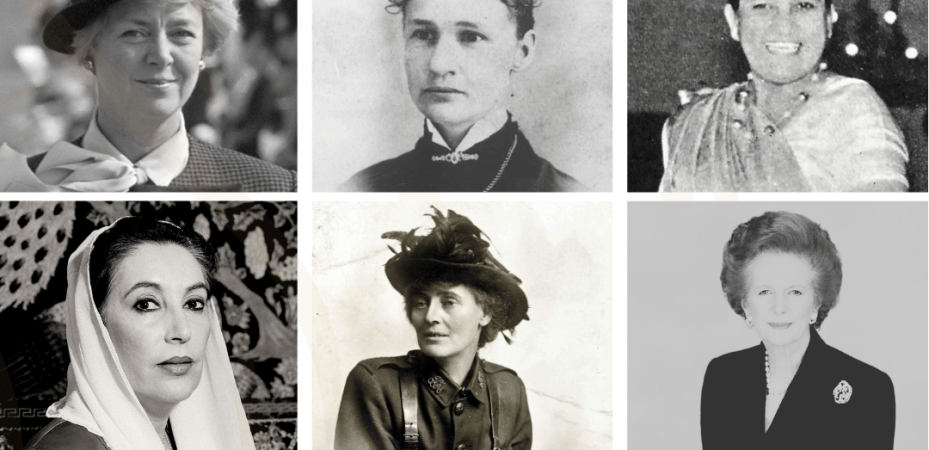
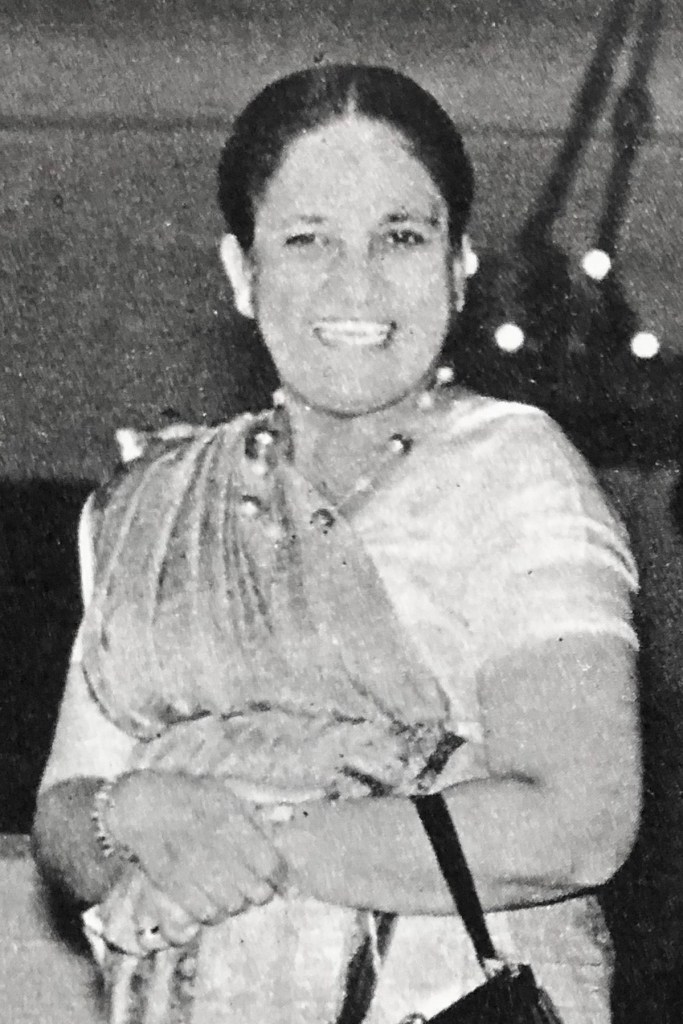
The first one that I’m going to go with was Sirimavo Bandaranaike, prime minister of Sri Lanka. She entered politics after her husband was assassinated while being prime minister. In 1960, she won an election of her own.
Neighboring India makes things complicated by having both a prime minister and a president, but their first female prime minister was Indira Gandhi, appointed in 1966. If you, like me, always assumed that she was greatly helped by being related to Mahatma Gandhi, then you, like me, would be totally wrong. Gandhi is a common name. They were not related.
In 1969, Golda Meir became prime minister of Israel. She had little patience for the polite and time-wasting niceties of small talk. In one visit to Moscow, she was chatting with the Ambassador through an interpreter. The Ambassador asked, “How did you arrive in Moscow?” The translator relayed the question. Golda asked, “What, don’t you know how we came here?” The translator said yes, he knew, but the Ambassador asked. Golda said, “So tell him by plane.” Then the Ambassador asked where she was staying. The translator translated. And she said “What, don’t you know where we are staying?” The translator had to say, “I do, but he does not.” Clearly, Golda was hoping the Ambassador would just make small talk with the translator instead of her. In a future visit, she was so fed up with this stuff that she told the translator to tell him they had arrived by donkey and were staying in a large tent.
Margaret Thatcher became the first female prime minister of the United Kingdom in 1979. She was (and is) a hugely divisive figure. Whether you think she was great or terrible, let’s please keep in mind that as women start to fill roles of this nature, of course some of them are going to do it well and others badly. That has always been true of the menfolk. Women are, and will be, no different.
The first female president of a country was Isabel Péron, of Argentina, but she wasn’t elected to that position. She was vice president to her husband Juan Péron, and she took over as president when he died in 1974. If you, like me, are thinking, wait, wasn’t Péron’s wife named Eva or Evita? As in don’t cry for me, Argentina? Yes, that’s right. Eva was wife #2. Isabel was wife #3.
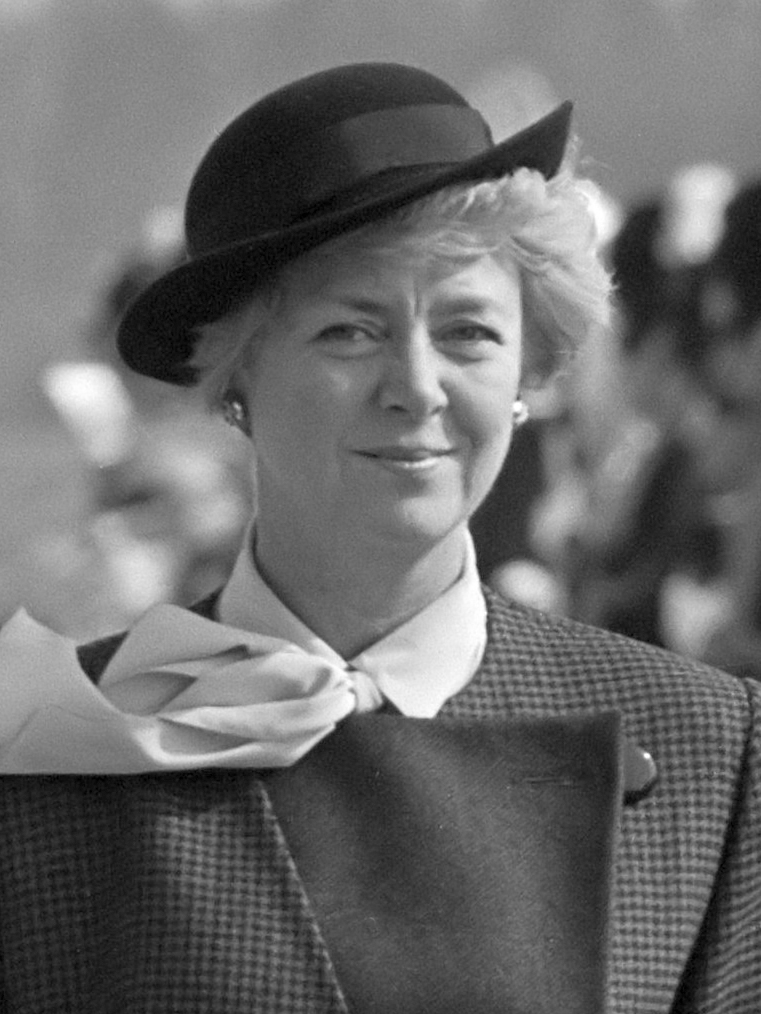
The first female president who was elected as president of her country by the citizens of that country, not an elected body, was Vigdís Finnbogadóttir of Iceland. She won against three men in 1980. In 1984 she ran again and was unopposed. In 1988 she ran again and won 92% percent of the vote! I mean imagine if someone won 92% of the vote in this US election. The mind boggles. Clearly, her potential rivals got the message, because in 1992 she ran again and was again unopposed, which means she served for a total of 16 years.
The first female prime minister of a Muslim state was Benazir Bhutto of Pakistan. She was elected in 1988. As you may remember, if you listened to episode 12.7 on Arwa al-Sulayhi, Bhutto was criticized by the opposition because whoever heard of a woman leading a Muslim state! Which shows an ignorance of history that is all too common in political ads. Women had more than once led Muslim states before, they had just done it as queens, not prime ministers.
There is at this point, no inhabited continent that has not had a female leader. Here is a link out to an animated map where you can see the countries changing from gray to green over time as soon as they’ve had female leader. Interestingly, Eastern Europe has more green than Western Europe does. South Asia into Oceania also looks very green. North America would be very green, if not for the really big gray slab in the middle where I live. But the gray slab was much bigger until quite recently. Claudia Scheinbaum just became president of Mexico in October 2024.
Of the 193 UN member states, 13 of them currently have a female leader, and 9 of those 13 are their country’s very first. Stay tuned to some podcast other than mine to see if those numbers will each go up by one after today.
Women in National Assemblies, Parliaments, Congresses, Etc.
If we spread our net a little wider and look at elected officials who got elected to a national congressional or parliamentary body, then there are a whole lot more women to talk about, and they get going earlier. Of course, it also means I can’t possibly cover them all, so here are just a handful of women and nations that stood out to me:
The first woman elected to the UK’s House of Commons was Constance Markievicz in December 1918. Which was complicated. Because she was in prison at the time. Her legal troubles were the result of being Irish and participating in the Easter Rising when Ireland tried and failed to gain their independence. She was never allowed to take her seat in the House of Commons.
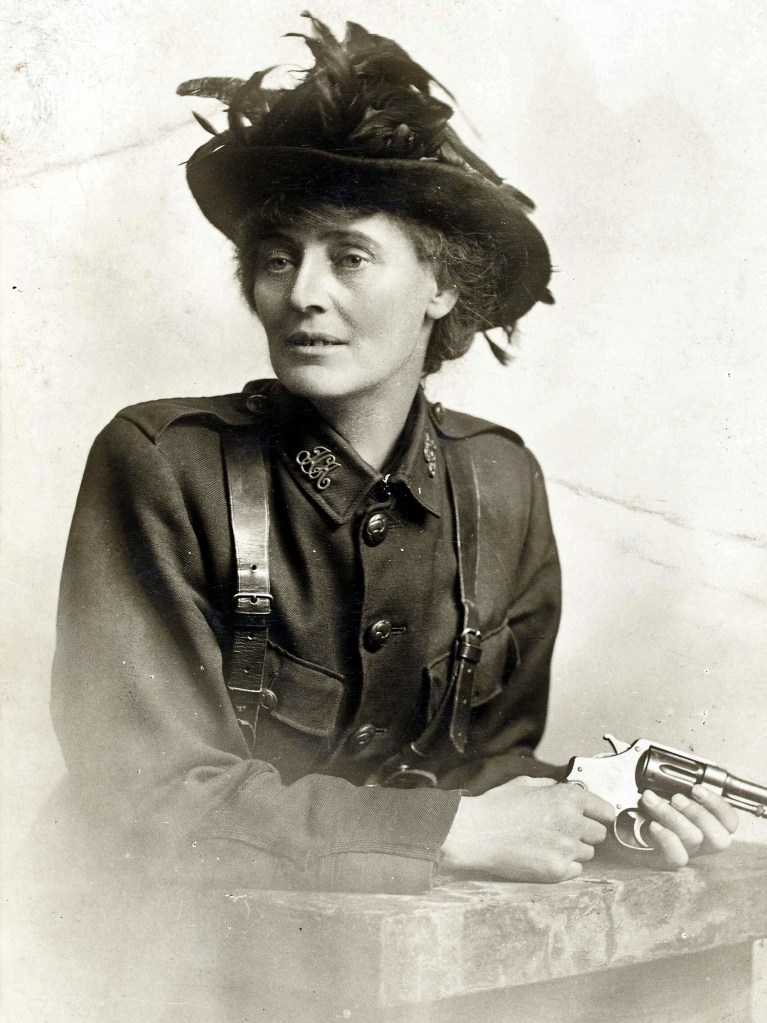
The first woman who was elected to the House of Commons and actually served there was the Right Honourable Viscountess Nancy Astor. Nancy was American-born, a member of a wealthy Southern family. She had married in the US, but she was unhappy, and it took her a while to get a divorce. She decided she liked England better. It was a time of British Lords marrying American money, and an Englishwoman once said to her “Have you come to get our husbands?” And Nancy said, “If you knew the trouble I had getting rid of mine…” Anyway, long story short, she did marry a British man, he served in the House of Commons, then he was elevated to the House of Lords, and she decided to go for his seat in the Commons. This was no mere handing over the reins, as had been done in countless other less democratic situations. She did have to win a contested election.
The first woman elected to the US Congress was Jeanette Rankin who became a Senator from Montana in 1916, which incidentally is before the 19th Amendment gave women the vote. Yes, that’s right a woman voted on the Senate floor before she was allowed to vote a regular old election. One of those votes was the one she cast against the US entering World War I. It was a vote that she felt strongly about as a pacificist, but it wasn’t popular and she didn’t get reelected. Not until 1940, that is. Let no one say politicians can’t stick to their principles because Jeanette did. She had voted against the first world war and in after the Japanese attacked Pearl Harbor, she was the one and only member of Congress to vote against entering the second world war. That vote was unpopular too.
The US was not alone in electing a woman before women had the right to vote. The Netherlands did the same thing with Suze Groeneweg in 1918. Interestingly, New Zealand is the opposite story. They were first out of the gate for granting women the right to vote in 1893. That’s early. But they didn’t elect a woman to Parliament until 1933 when Elizabeth McCombs took her seat.
Speaking of women voting, Switzerland, which is so with-it in so many things, was not exactly a trendsetter in the subject of women’s suffrage. Though their women’s rights movement is about as old as anyone else’s, women there didn’t get the right to vote until 1971. What was the holdup? Well, that’s complicated and there were several reasons, all of which are worthy of a podcast episode, but the factor I found most interesting was the fact that Switzerland managed to remain neutral in not just one, but two, world wars. If that seems unrelated, it’s not. Women in multiple countries were able to leverage all the work they had done during the world wars while the menfolk were off fighting. How, they said, could anyone claim they were incapable after that? Clearly, they could do all the jobs the men regularly did, and they deserved the vote. It was an argument that played well in many countries, including the US. Swiss women couldn’t use that tactic. Anyway, having gotten their act together at last, the Swiss wasted no time in electing some women. Ten took their seats right then in 1971. Same year women got the right to vote.
Women in Lower Levels of Government
If we spread our net still wider and look at women in lower levels of government, then they get going even earlier, and I’m just going to break down and look at the US only because there’s no way to keep up with the whole world world:
The first female state senator in the United States was Martha Hughes Cannon, elected in 1896 in the state of Utah. She was a fully qualified medical doctor, with an MD from the University of Michigan. She was also the fourth of six wives in a polygamous marriage. Her arguments for women’s rights were pretty much what you’d expect. Her argument for polygamy was an amusing one: If you have sister wives, they’ll spend time with your husband, so you don’t have to!
Actually, it may not be as bad as it sounds. I am pretty sure she meant that in the context of 19th century America, a wife had to provide a clean home and a hot dinner to her husband every night of the week, and that’s a big job in a world without modern appliances or takeout. So yes, it’s easier if you have sister wives to take care of that.
But then again, maybe it was as bad as it sounds. Martha ran her campaign as a Democrat. Her husband ran as a Republican for the same seat. She won.
The first female mayor of a city in the United States is the fabulous Susanna Salter of Argonia, Kansas.
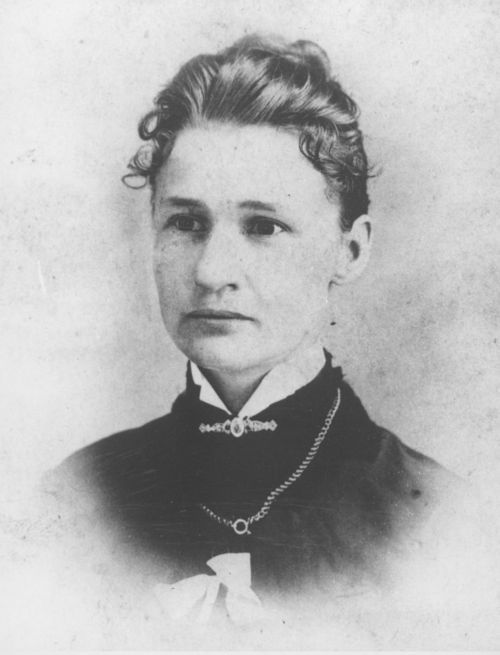
Her election story sounds far-fetched, but as far as I can tell, it’s true. She never actually put herself forward as a candidate. What she had done was preside at a caucus of the Women’s Christian Temperance Union (or WCTU). They were not a political party, per se. They were a women’s organization and women had only gotten the right to vote in municipal elections that very year. Federal elections were still totally out.
The WCTU under Susanna Salter and created a list of male candidates who generally agreed with the WCTU, regardless of whether they were Republicans or Democrats. But some of the men in town were not so pleased with women endorsing any candidates. It was presumptuous. It was extreme. It would all lead to tears. Their solution was to plan a lesson for these uppity women. At the time, candidates did not have to file before election day. So it was perfectly possible for these men to file Susanna as a candidate for mayor and get the ballots printed, all without her knowledge. Their assumption was that no man was going to vote for a woman and the women would be humiliated.
What actually happened was that the first voters of the day say her name on the ballot and were surprised. The chairman of the local Republicans sent a delegation to her house. (You can tell this was a small town; they knew where she lived.) The delegation asked if she would actually serve if elected. Susanna said yes. They said we can get you elected. And they did. The Republicans (most of them teetotalers, like the WCTU) turned out and elected Susanna Salter with a 2/3 majority (Weatherford, 240). Susanna, by the way, also gave birth to her fifth child while in office. Just saying it’s possible.
As far as female empowerment was concerned, Kansas was the state to live in. The very next year, that’s 1888, Oskaloosa, Kansas, became the first town to have an all-female government, by which I mean the mayor and the entire city council elected were all women (Center for American Women and Politics). I’m not saying that’s a good goal, but it does remind me of Ruth Bader Ginsburg’s famous quote. She was asked how many women on the Supreme Court would be enough, and she said nine. Or in other words, all of them female. Of course, people were shocked, but Ginsburg replied “But there’d been nine men, and nobody’s ever raised a question about that.”
Obviously, there are a great many more women and places to talk about, but I’ll save it for some future series on women in elected office.
 Her Half of History