
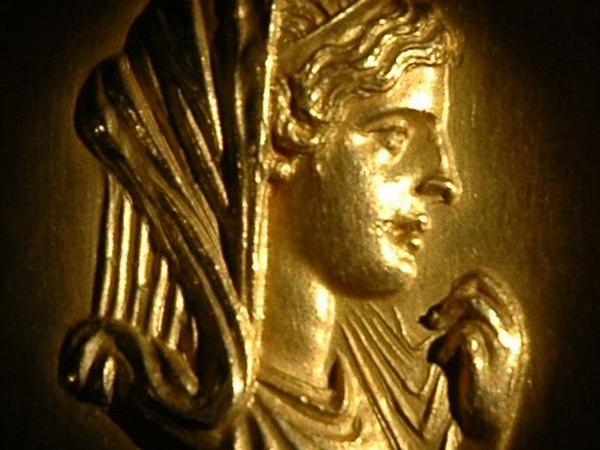
Today’s leading lady was suggested by listener Grace. Thank you, Grace.
In case you need a refresher: Alexander the Great is among the most famous military conquerors in history. He lived in the 4th century BCE, in the just-north-of-Greece country of Macedonia. When he became king, he proceeded to conquer the Greek city-states, the Persian Empire, Egypt, Asia Minor, Syria, Iran, Afghanistan, India, most of the known-to-them world, really. It’s very impressive, as long as you don’t have a modern sense of morality. Having conquered his empire, Alexander then died young. His empire fell apart as quickly as he had put it together, but not without having spread Greek culture across a wide swathe of civilization.
He was also, according to some depictions, a mama’s boy. And this is the story of his mama.
A Childhood in Molossia
Olympias was born in Molossia, a place name that conveyed exactly nothing to my mind, so let’s try to orient ourselves. If I say Greece, you are probably thinking of the southern bit of the Balkan peninsula, plus a lot of islands. Ancient Greece covered roughly the same territory, but it was not a country. It was a collection of many independent territories. Athens was just one city-state among many, and not a very typical one. Molossia was up in the northwestern part of what we now call Greece, and while it shared some cultural connections with Athens, there were also a lot of things it didn’t share, like democracy and really good silver mines. On the other hand, from a feminist perspective, things were pretty good in Molossia. Women there could own property, act as guardians for their children, become citizens, and pass citizenship on to their children. Throughout her life, Olympias seems to converse with men to whom she is not related. She doesn’t seem to be secluded, and she takes an active role in political events, all things that Athenian men made sure their own women didn’t do (Carney, 7).
So far so good, though Olympias likely didn’t realize the extent of her good fortune there.
She also didn’t realize her name was Olympias. Ancient writers give her four names, without much explanation, but the first one was Polyxena. It’s a name from Homer’s Iliad, which was perfect. Her family claimed descent from Achilles (Carney, 5). The second name, Myrtale, was probably a name given after a religious initiation, though we don’t know that for sure. My guess is that that is the name she was using when as a teenager, she traveled to Samothrace for additional religious rites and there she met a certain young man.
Okay, maybe he wasn’t all that young, but a man in the prime of life and he was also a king: King Philip II of Macedonia, a country that Athenians had long looked down on, but Molossians didn’t. And Macedonia was up-and-coming.
According to Plutarch, who wrote all this down hundreds of years later, Philip and Olympias (or whatever she was called at the time) fell in love on this chance meeting and soon the royal wedding bells were chiming.
The reality is almost certainly less romantic.
For starters, Philip was a polygamist. Olympias was his fourth or fifth wife, we’re not quite sure. For another thing, love was irrelevant to most marriages, especially to royal ones.
I hope there was some mutual attraction there, but the wedding bells were undoubtedly celebrating a political alliance, just as they had for all of Philip’s previous wives. And finally, Samothrace is isolated and hard to get to. The likelihood of a reigning king and a neighboring princess meeting there by chance is pretty much nil. It is far more likely that marriage negotiations were already underway, and they met there on purpose (Carney, 12-22). Her name was likely changed to Olympias some time afterwards.
A Royal Wedding and the Birth of Alexander
Nobody gives us a date on the marriage, but it was probably in the fall of 357 BCE because their son Alexander was born the following July. It is somewhat unusual, but not unheard of, for ancient sources to mention a birth at all. Most histories of this time period have characters that spring forth fully grown because childhood is irrelevant. But mythic heroes have mythic origins, and Alexander gets a treatment much more like mythology.
That is why we are told that on the night before the consummation of the marriage, Olympias dreamed she was struck by a thunder bolt which kindled a great fire. This is very convenient for a man who later claimed his father was actually Zeus, the king of the Gods. We are also told Olympias was once found asleep next to a snake, which might have been the current manifestation of a God or it might have meant she was an enchantress. Olympias, we are told, was an enthusiastic devotee of Orphic rites and worship of Bacchus, by way of wild dances with snakes and fans, “which the men could not look upon without terror” (Plutarch).
Philip, it is said, felt less passion for her after all the snake stuff.
It is hard to know what to make of all this. Greece did have religious rituals that involved snakes and dancing (Rodríguez Pérez). Women’s religious rituals did often bar men and leave them feeling out of place. It is certainly within the realm of possibility that a snake could pass by while you are napping, especially if you keep pet snakes nearby anyway for religious purposes.
So it’s all within the realm of being true. But they’re also within the realm of possibly being a smear campaign. Throughout history, the easiest way to pull down a powerful woman is to accuse her of unchastity. Accusing her witchcraft and enchantment is a close second.
And Olympias was a powerful woman. In polygamous royal families, it is not necessarily the first wife who gains the ascendancy. It is the one who bears a son.
In a curious twist for a man with seven wives, Philip only managed to sire two sons.
One was Alexander. The other was about the same age. His name was Arrhidaeus, and he had some undescribed mental limitations, which knocked him out of any serious contention as heir (Carney, 29). Plutarch says Olympias caused those mental limitations with bewitching drugs. See the above comment on how to bring down a powerful woman.
Anyway, Alexander was clearly the favored heir when Philip left on campaign and put the 16-year-old Alexander in charge at home as regent in the year 340 BCE. That meant Olympias was definitely the most important woman at court, and probably had been for some time (Carney, 25).
Sadly, we have next to no details about what her life was like there. We do know that 340 is about when Aristotle left court, having taught Alexander for three years. Maybe Olympias was involved in that education? Maybe not. But all seemed to be going well until 337 BCE.

A Turbulent Royal Wedding
In that year, Philip married his seventh and last wife, Cleopatra (not that Cleopatra, this is another one). Another wedding was no biggie. Philip had already been there, done that. Even if Cleopatra had a son, he would be twenty years younger than Alexander, so it is hard to see how or why he would be a threat.
However, the wedding celebrations were eventful. There was a party, which I would call a bachelor party except that Philip was no bachelor. But it was all men and plenty of drinking.
Cleopatra’s guardian was a man named Attalus, and he made a comment that with this marriage, Philip could finally get himself a legitimate child (Plutarch, Carney, 31).
Alexander angrily asked if he looked like a bastard, and he possibly threw his wine cup at Attalus. Then Philip drew his sword against his own son, but being drunk as a skunk, he slipped and he fell. At which point Alexander the Snot asked how his father was going to manage to attack Asia when he couldn’t even make it to the next couch, much less the next continent (Plutarch, Carney, 32).
None of this makes any sense unless you remember they were all drunk, so of course it doesn’t make sense. Alexander was definitely legitimate, and even if he had been illegitimate, the Macedonians didn’t have any clear laws that would have barred him from inheriting on those grounds.
The most reasonable explanation is that perhaps Attalus meant Olympias was a foreigner. If Cleopatra was a Macedonian, then her children with Philip would be fully Macedonian, and maybe some people would think that was preferable to a Molossian connection. Unfortunately, we know 100% of nothing about Attalus or Cleopatra’s background, so it’s hard to prove this theory.
Then there’s the question of why Philip would raise his sword against Alexander instead of against Attalus. My primary answer is he was drunk, with a secondary answer of Attalus was the guest. One does not attack a guest, by the very serious laws of hospitality. But it is also possible that Attalus had some kind of power or resources that Philip really needed. Again, we are in total ignorance. The upshot of it all was that Alexander and Olympias both left court. Olympias went home to Molossia (Plutarch, Carney, 32).
My own thoughts on this were “No! You don’t just retreat!”
But I was wrong because what this did was force Philip to make a public reconciliation. He could not afford to lose his heir, no matter what his new in-laws thought.
The Death of Philip and the Rise of Alexander
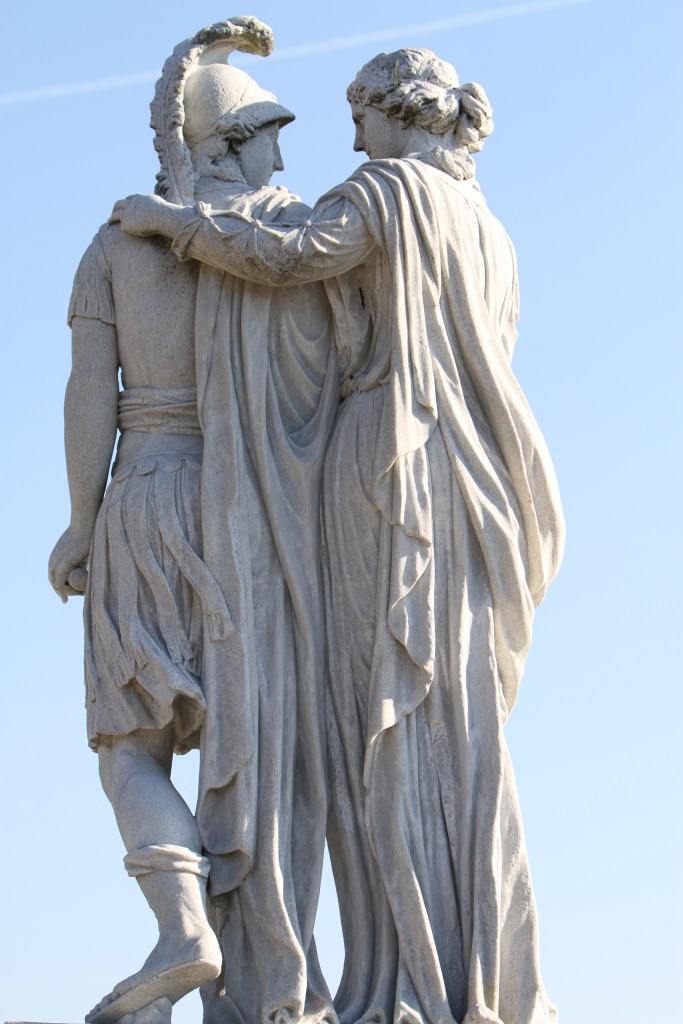
Reconciliation took the form of more honor for Olympias’s family. Olympias’s brother, the king of Molossia, married Cleopatra (not that Cleopatra, and not the one who just married Philip, this is yet another Cleopatra). This one was Philip and Olympias’ daughter, Alexander’s younger sister. Yes, that means the bride and groom were uncle and niece. No one had any problem with that.
This wedding was even more eventful. Because in the middle of it, one of Philip’s own bodyguards stabbed him as he stood in front of the crowd. This bodyguard, named Pausanias, had personal reasons for anger. Attalus and his friends had beaten Pausanias, and maybe gang-raped him, depending on which source you read. Pausanias expected Philip to punish Attalus on his behalf, only Philip didn’t (Goldsworthy, 195-195; Carney, 39). So Pausanias took his own revenge, not against his attacker, but against the man who failed to protect him.
We get not one word of anything that Olympias may have felt upon the death of her husband. But we do get more than a whiff of suspicion that she had nudged Pausanias into it. After all, she and Pausanias shared the same enemies. By bumping off Philip, she ensured that her son was the only possible heir.
If Olympias was the murderer, then she was directly responsible for bringing Alexander to power. The woman behind the man, indeed.
However, historian Elizabeth Carney doubts that Olympias was guilty, in this case. For one thing, she already had ready access to Philip. Why kill him publicly when she could have arranged for a much quieter “accident”? Also, why do at a feast that honored her own family: the wedding day of her brother and daughter? There were plenty of other people who could have encouraged Pausanias, even assuming he needed any encouragement at all (Carney, 39-40).
Regardless of whether she felt grief or secret triumph, there was much to do. Olympias and Alexander now needed to act to secure their new positions, which is a euphemism for killing anyone who could pose a potential threat. That was entirely normal in the world they lived in. In the words of Elizabeth Carney, “dynastic murders were a dime a dozen before and after these deaths” (Carney, 46).
It’s important to remember that, because Olympias was definitely a participant now. She was the one who dealt with Cleopatra, Philip’s newest wife, and her child. The ancient sources agree on that. They disagree on the details like method of death and the gender of the child. So we don’t know if Olympias’s actions were particularly barbaric or savage in context, or if they only seemed so because both murderer and victim were female. That was the part that was unusual (Carney, 43-95). Not the deaths themselves. Everyone expected that.
The Regency
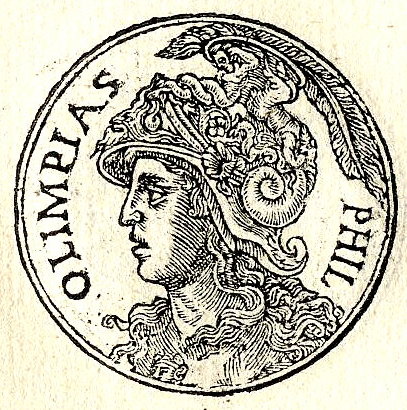
When the throne was secure, Alexander began his famous campaigns. What is not always mentioned is that no great conqueror can keep it up for long if he hasn’t got someone to keep the homeland peaceful, prosperous, and supportive.
Officially, that person was not Olympias. It was a man called Antipater. But no one’s role was very well defined. Macedonia didn’t have codified laws with a great weight of court precedent behind them. Both Philip and Alexander were kind of making things up as they went along.
So, it seems, was Olympias. Her name appears as the recipient on large shipments of grain to Macedonia. By comparison with other documented recipients, she was acting as head of state, not Antipater (Carney, 51). Olympias and her daughter also performed religious benefactions on an international scale. To us, this looks like religious devotion, which it may have been. But it was also diplomacy. That was how you made allies. This is not a high level of detail about her activities, but the fact that Alexander was able to maintain his army in the field for thirteen years means things were very, very well run back at home.
Meanwhile, Alexander was having delusions of grandeur. Or at least he was spreading rumors of grandeur, saying he was the son of Zeus, which made him a demigod. According to our not great sources, Olympias did not confirm this, but rather giggled nervously and asked her son to stop slandering her to Hera (Plutarch). I’m skeptical about this last bit.
Things Begin to Go Wrong
And then suddenly, Olympias packs up and returns home to Molossia. We are not told why, but the most obvious reason would be a disagreement with Antipater.
We do know that they were both complaining about each other in their letters to Alexander. You can imagine him in an army camp, reading his mail, and tearing his hair out while shouting “Can’t the two of you get along while I conquer the whole world? I’m a little busy here.”
By implication, we can guess that Olympias was the more persuasive letter writer because Alexander ordered Antipater to step down and come meet him in Babylon. Antipater didn’t come.
We don’t get to know how Alexander would have handled that bit of insubordination because he died. Suddenly, unexpectedly, and leaving the known world in political chaos as each of his generals and hangers on tried to claim the biggest piece of the empire. That struggle would have ramifications for centuries, including shaping the world of Cleopatra (yes, that Cleopatra, episode 2.2) and Salome Alexandra (episode 12.1).
But for Olympias, this was a lot more personal. She had lost her son, so imagine what that felt like (Carney, 60). Grief aside, there was also the fact that her position of power had always depended on his. Now she was on her own. And she blamed Antipater. She believed he had sent agents to poison Alexander. It could even be true. Surely, the world is full of perils and proposing a new cause of death for Alexander has been a favorite pastime of historians for centuries.
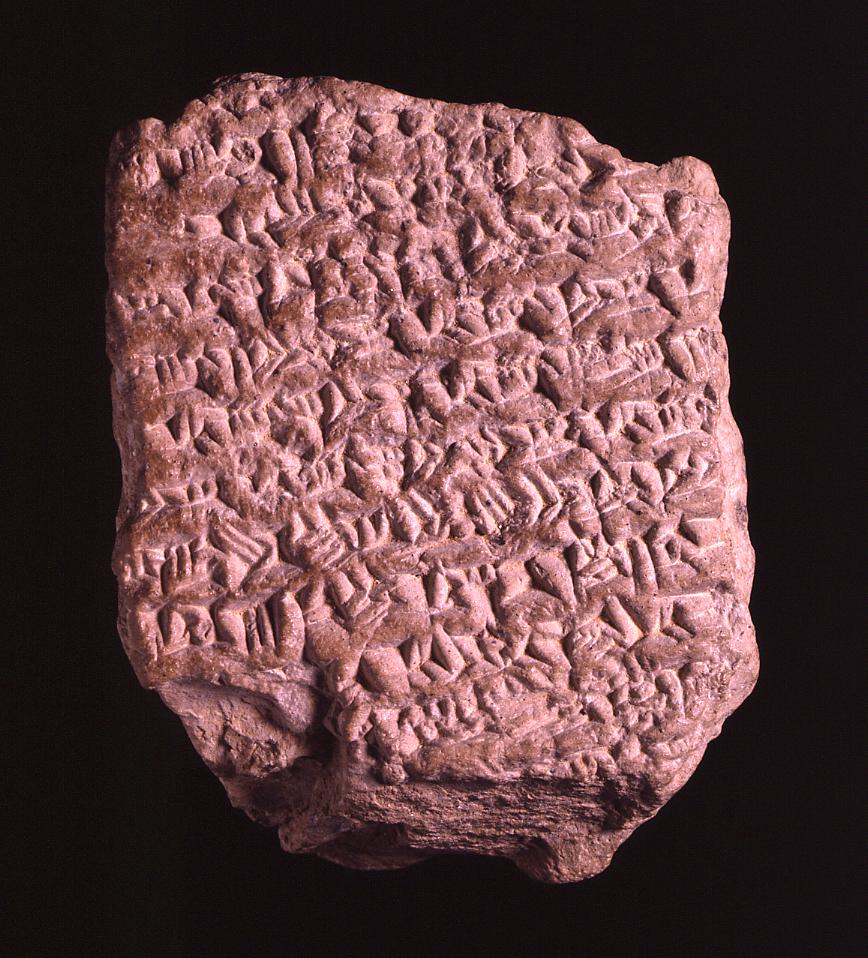
We’ll never know for sure how Alexander died. But Olympias felt sure, and she was in her home country of Molossia, where her daughter was regent. So she had some support, but she still lived in a man’s world. She needed a general who would be loyal and also brilliant as she took on Antipater.
Then Antipater took all the steam out of her plans of vengeance by dying of unrelated causes (Carney, 68).
Life-or-Death Decisions for a Grandmother
His successor was Polyperchon, who was no relation to Antipater. Polyperchon was not an enemy, and he invited Olympias to come back to Macedonia and take a public role. More specifically, she could take charge of her grandson.
Now let’s backtrack a minute. The reason Alexander is so often been portrayed as a mama’s boy is because he clearly had a close relationship with his mother, but he wasn’t all that interested in any other woman. He did have male lovers, but he doesn’t even seem to be all that interested in them. Military conquest was his one true love. He did belatedly get married to a princess Olympias had never met in a country she may not ever have heard of before Alexander conquered it. The princess’s name was Roxane, and she was pregnant when Alexander died. If the babe was a boy, he was an obvious heir, but if the babe was a girl, no one needed to care because that’s how the world works. So the situation was inherently tricky.
The baby was a boy.
For Olympias to champion a grandson she had not yet laid eyes on was to throw herself into a struggle she would almost certainly lose. An heir that young was very unlikely to survive. If the childhood diseases didn’t get him, a rival almost certainly would. Even if he turned out to be the second coming of Alexander himself, Olympias would probably not live that long. She was now in her late 50s (Carney, 71).
That is probably why Olympias refused Polyperchon’s offer several times. Nevertheless, in 317 she changed her mind and agreed (Carney, 71). It is not clear to me what convinced her.
Once in Macedonia, Olympias took charge again. Polyperchon did not stand in her way.
The person who did stand in her way was another woman. Her name was Adea Eurydice. She was the wife of Arrhidaeus, Alexander’s mentally infirm half-brother. He was another possible heir to the throne. He could not fight his own cause, so his wife was doing it for him. Both women mustered their forces. This battle was unusual for being fought between two women.
By some accounts Adea Eurydice took to the field and commanded her army in person. Olympias did not. Instead she dressed religiously, as a worshipper of Dionysus (Carney, 74). Adea Eurydice’s army defected to Olympias. The reasons are obscure, but I suspect because Olympias represented the glory and stability of the past, when Philip and Alexander made Macedonians feel that they were the superior race of humanity.
As the clear winner of this battle for power, Olympias followed the same script that everyone else did in like circumstances: she killed Adea Eurydice, and Arrhidaeus, and Antipater’s son and a lot of their friends.
Antipater had another son who was still alive. His name was Cassander, and he was the one Olympias thought had actually done the poisoning of Alexander so far from Macedonia. He was on his way home, with an army.
Olympias dispatched her troops, and Polyperchon tried too. But aid from Greek allies never arrived, and Polyperchon’s troops were bribed away, and eventually Olympias found herself besieged, with only a small, starving force of men who begged and were granted permission to slip away (Carney, 81).
Defeated, Olympias ordered the surrender. Cassander promised her personal safety to get that surrender, but everyone knew he was lying. To give himself cover, he turned her over for trial, though it is not clear who was judge and jury. Quite likely, they were the very men who had just been besieging her, so they were hardly impartial. It’s not very surprising that they ordered her execution.
A Hero’s Death
The ancient accounts of her death vary considerably:
In the simplest version, she is stoned to death.
In the next version, the men sent to kill her were so impressed by her resemblance to Alexander that Cassander had to send a backup crew to get the job done.
And in the last version, Cassander tried to lure Olympias into running away, so he could have her killed in the escape, without dirtying his hands. But she could not be duped into anything so cowardly as flight, so Cassander sent 200 soldiers who were overwhelmed by her royal glory that they refused to do the job. So he sent the relatives of her various victims, and they killed her but she was brave to the end and said nothing “womanish” (Carney, 82).
It’s all very epic Greek tragedy. But Elizabeth Carney points that theatricality does not necessarily make it untrue. Cassander and Olympias and the soldiers in the army knew their Homer and probably, they knew their other Greek playwrights of Athenian history. They knew how a male hero should die: theatrically. Perhaps that is how Olympias saw herself, a descendent of Achilles. And perhaps it is the death she chose.
Selected Sources
Carney, Elizabeth. Olympias. Routledge, 27 Sept. 2006.
Dixon, Michael D. “Review of Elizabeth Carney’s Olympias, Mother of Alexander the Great.” Classical Journal, cj.camws.org/Dixon%20on%20Carney.pdf. Accessed 19 Nov. 2024.
Freeman, Philip. Alexander the Great. New York, Simon & Schuster, 2011.
Goldsworthy, Adrian. Philip and Alexander. Basic Books, 13 Oct. 2020.
Plutarch. “Plutarch’s Lives, Trans. By A. H. Clough.” Gutenberg.org, http://www.gutenberg.org/files/674/674-h/674-h.htm#chap47. Accessed 15 Nov. 2024.
Rodríguez Pérez, Diana. 2021. “The Meaning of the Snake in the Ancient Greek World” Arts 10, no. 1: 2. https://doi.org/10.3390/arts10010002
 Her Half of History


I think Olympia may have killed Phillip in her hometown so that if anyone tried to point fingers at Olympia, she was surrounded by people who would defend and protect her.
LikeLike
[…] who don’t have your same advantages is that sometimes they flame out and get their revenge. Alexander the Great, Attila the Hun, and Napoleon were all from communities that were sidelined to varying degrees, but […]
LikeLike
[…] https://medusaarchive.omeka.net/exhibits/show/biographies/olympias 14.2 Olympias, Mother of Alexander the Great […]
LikeLike